NU at a Crossroads: Why Gus Hery Haryanto Azumi Could Be the Leader Nahdlatul Ulama Needs
As Nahdlatul Ulama enters a new era, many believe Gus Hery Haryanto Azumi offers the vision, integrity, and leadership NU needs.
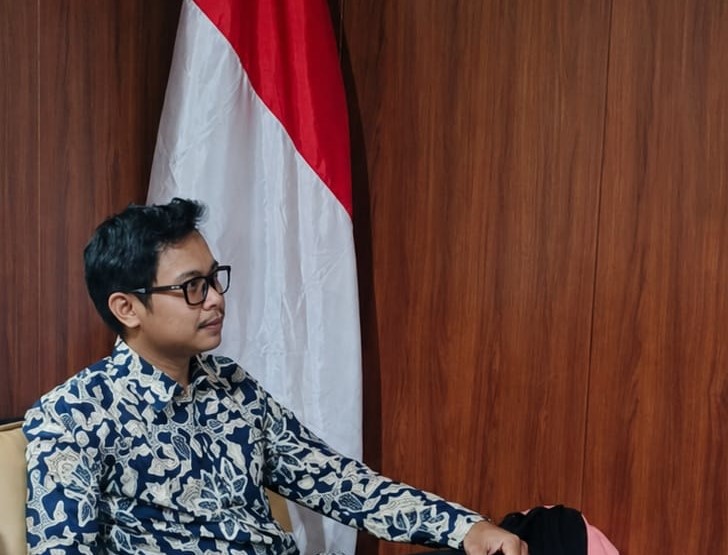
Cendhy Vicky, Young Cadre of Nahdlatul Ulama.
By Cendhy Vicky
Young Cadre of Nahdlatul Ulama
As Nahdlatul Ulama (NU), the world’s largest Muslim organization, enters its second century, it stands at a defining moment in its history. While the organization continues to play a significant role in Indonesian society, recent internal developments have raised difficult questions about its future direction.
Several controversies have placed NU under public scrutiny. Among them are concerns over the moral judgment of some of its senior figures, particularly regarding relationships with individuals perceived as supportive of Israel during the ongoing humanitarian crisis in Palestine. Questions have also emerged over governance and financial management, especially following debates surrounding mining concessions linked to the organization. More recently, tensions within NU’s highest leadership have become increasingly visible, exposing internal divisions that have unsettled many members.
Against this backdrop, NU is preparing for another leadership transition through its upcoming congress (Muktamar). This is more than a routine succession. It is an opportunity to restore public confidence and reaffirm NU’s historic role as one of Indonesia’s most influential pillars of civil society.
Indonesia’s democracy has long benefited from the presence of strong religious organizations such as NU and Muhammadiyah. Political scientist William Liddle has often highlighted how these organizations strengthen democratic life by connecting religious values with civic engagement. That tradition deserves to be preserved.
The Questions NU Must Answer
As NU approaches its next chapter, several fundamental questions deserve careful consideration.
Who is the right person to lead the organization? How should NU position itself in relation to the Indonesian state? And perhaps most importantly, how can NU continue to project its voice on the global stage?
Finding the right answers requires more than popularity or political influence. Future leadership should be measured against several essential qualities.
A prospective chairman should possess both deep Islamic scholarship and a broad understanding of contemporary social issues. He should maintain close relationships with grassroots NU members and respected religious scholars while also serving as a bridge between society and the government—supporting cooperation where necessary while remaining capable of offering constructive criticism.
Equally important, NU needs a leader capable of restoring its international presence, following the legacy established during the leadership of Abdurrahman Wahid (Gus Dur) and later Said Aqil Siradj, when NU became widely recognized as a global advocate for moderate Islam, peace, and interfaith dialogue.
These challenges demand energy, vision, and experience. They also require someone who understands that NU’s greatest strength lies in its independence as a civil society organization, not as an extension of partisan political interests.
Why Gus Hery Haryanto Azumi Stands Out
Among the names emerging ahead of the Muktamar, Gus Hery Haryanto Azumi deserves serious consideration.
His personal journey reflects a rare combination of traditional Islamic education and global intellectual engagement. Raised within Indonesia’s pesantren tradition, Gus Hery has remained firmly rooted in NU’s religious heritage while developing an international outlook through scholarship, activism, and public discourse.
His organizational career began within the Indonesian Islamic Student Movement (PMII), where he advanced from local leadership to become Chairman of the organization’s national executive board. During his tenure, he was not merely an administrator but also contributed to strengthening PMII’s intellectual culture by introducing new conceptual frameworks that encouraged critical thinking among young Muslim leaders.
Even after completing his term, he has continued mentoring younger generations of PMII activists, demonstrating that leadership is a lifelong commitment rather than a temporary position.
A Commitment to Pluralism and Civil Society
Beyond his organizational achievements, Gus Hery has consistently demonstrated a strong commitment to pluralism—one of the defining principles championed by Gus Dur.
His engagement extends across religious, cultural, and ethnic boundaries. He has built relationships with leaders from various faith communities, reflecting an inclusive approach that is increasingly valuable in today’s polarized world.
He is also recognized as one of the initiators of Majelis Dzikir Hubbul Wathon, a forum that brings together respected Islamic scholars from across Indonesia to strengthen religious moderation and counter the spread of extremism.
These experiences reinforce his identity as a genuine representative of NU’s civil society tradition—one that values dialogue, equality, and democratic participation over confrontation or exclusion.
Bringing NU Back to the Global Conversation
Perhaps one of Gus Hery’s strongest yet least discussed assets is his international network.
Over the years, he has developed relationships with academics, activists, and policymakers across different regions of the world—not through high-ranking government positions, but through personal credibility and intellectual engagement.
In an increasingly interconnected world, NU needs leaders who can communicate Indonesia’s model of moderate Islam internationally while contributing meaningfully to global conversations on peacebuilding, religious tolerance, and humanitarian cooperation.
Choosing NU’s Future Wisely
Leadership transitions are never simply about individuals; they are about the direction an institution chooses to take.
As NU prepares for its next Muktamar, members should evaluate every candidate with fairness, objectivity, and a long-term vision. NU belongs neither to political factions nor to particular interest groups. It belongs to its members and to the broader mission it has carried for more than a century.
No leader is without flaws. Perfection has never been the standard for leadership. What matters is integrity, experience, humility, and the ability to grow through challenges.
Whether or not Gus Hery Haryanto Azumi ultimately earns the mandate to lead NU, his journey offers qualities that deserve thoughtful consideration. At a time when NU seeks to renew its credibility and strengthen its role both nationally and internationally, leadership rooted in intellectual depth, inclusive values, and civic commitment may be exactly what the organization needs. (*)