PBNU Chairmanship Hopeful Gus Hery Courts Lampung NU Leaders, Pledges Service and Inclusive Leadership
PBNU chairmanship hopeful Gus Hery met NU branch leaders in Lampung, pledging inclusive leadership, regional representation, and service ahead of the 35th NU Congress.
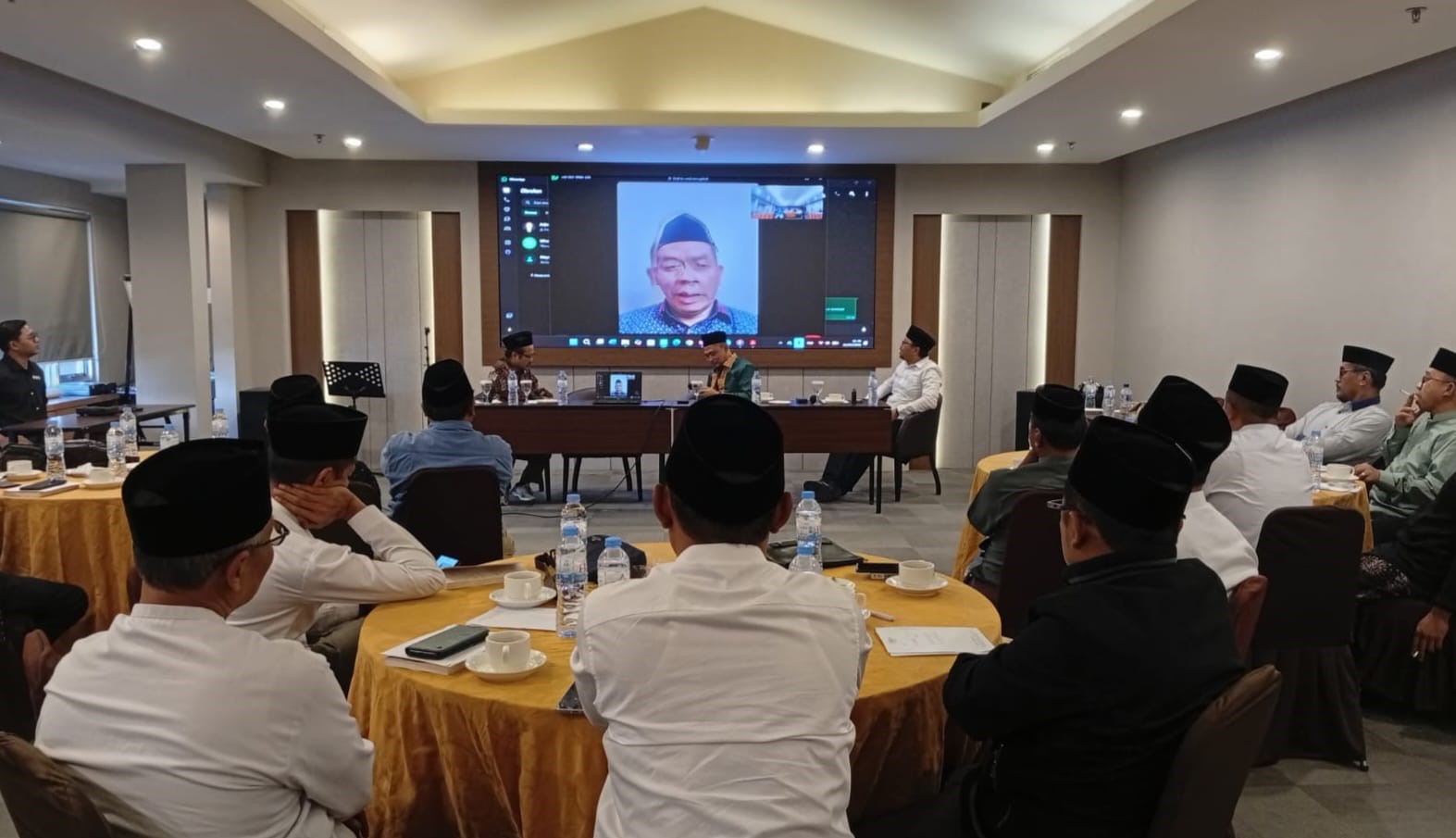
As discussions ahead of the 35th Nahdlatul Ulama (NU) Congress continue to gain momentum, PBNU chairmanship hopeful Hery Haryanto Azumi, widely known as Gus Hery, met with leaders from 15 Nahdlatul Ulama branch offices (PCNU) across Lampung Province on Saturday in a dialogue focused on the future direction of Indonesia's largest Islamic organization.
BANDAR LAMPUNG, Indonesia — As discussions ahead of the 35th Nahdlatul Ulama (NU) Congress continue to gain momentum, PBNU chairmanship hopeful Hery Haryanto Azumi, widely known as Gus Hery, met with leaders from 15 Nahdlatul Ulama branch offices (PCNU) across Lampung Province on Saturday in a dialogue focused on the future direction of Indonesia’s largest Islamic organization.
The hybrid gathering connected Gus Hery virtually via Zoom, while his campaign team attended the meeting in Bandar Lampung in person. The delegation was led by campaign chairman Dr. H. Fadli Yasir, MA, accompanied by Dr. Akhmad Khusyairi, ST, M.Eng., and Samsul Muarif, M.Si.
Moderated by Bandar Lampung PCNU Secretary Dr. H. Mairozi, the forum featured an open discussion in which local clerics and branch leaders shared their expectations for NU’s leadership as the organization enters its second century.
Opening the discussion, Fadli Yasir described Lampung as a province with special historical significance for Nahdlatul Ulama, noting that it hosted the 34th NU Congress, which produced several landmark organizational decisions.
“That is why we are here not only to strengthen ties, but also to listen directly to the aspirations of local clerics and branch leaders who have become the backbone of NU at the grassroots level. We believe NU’s future must be built through dialogue with every region, not solely from the national headquarters,” Fadli said.
Speaking remotely, Gus Hery emphasized that his decision to run for the PBNU chairmanship was driven by a commitment to serve rather than personal ambition.
“I am not here because I believe I know more or am more capable than others, nor am I here to lecture our respected clerics. I come to learn, to listen, and to serve. Our goal is to align our collective efforts and unite our vision for the advancement of Nahdlatul Ulama and the welfare of the people. NU will become stronger when all of its elements move forward together in the spirit of consultation and brotherhood,” he said.
The discussion drew active participation from several branch chairmen, including KH. Ichwan Ajiwibowo of Bandar Lampung, KH. Ismail of Metro, KH. Imam Syafii of West Lampung, KH. Nurul Huda of Way Kanan, KH. Nurul Hadi of Tulang Bawang Barat, and KH. Sonhaji Anis of North Lampung.
Many participants expressed support for Gus Hery’s candidacy, saying his emergence had brought renewed energy to NU’s leadership regeneration process. They also voiced hopes that the upcoming congress would provide greater opportunities for younger NU cadres with strong competence, integrity, and long-term vision.
Representing the participants, KH. Ichwan Ajiwibowo stressed that NU needs a leader who fully understands the organization’s challenges from the grassroots upward.
“The next PBNU chairman must have a comprehensive understanding of the issues facing NU, not simply observe them from a distance. Our shared reflection today is that Gus Hery understands those challenges. The future leadership should therefore provide greater space for regional branches and lower organizational structures to help shape NU’s direction,” he said.
Ichwan also argued that NU needs a clear strategic roadmap for its second century and called for more balanced organizational development beyond Java Island.
“The potential of NU across Sumatra and other regions outside Java is enormous, yet it has not received proportional representation. Future PBNU leadership should embrace all regions fairly, without creating a divide between the center and the regions,” he added.
Responding to those concerns, Gus Hery said regional inclusion would be one of his priorities if elected.
He cited the leadership of the late KH. Idham Chalid as an important inspiration, saying the former NU leader demonstrated how the organization could remain united while embracing a broad national perspective.
“In the future, PBNU’s leadership structure should become more representative and strategic. Its composition must reflect NU’s national strength by providing greater opportunities for leaders from outside Java. NU has an extraordinary generation of young cadres, and our responsibility is to build a system that empowers all of them for the organization’s future,” Gus Hery said.
Fadli Yasir echoed that view, saying his team supports a more balanced representation between Java and other regions.
He also proposed regular consultation forums involving clerics from across Indonesia to ensure PBNU continues receiving direct input from local communities.
“As NU enters its second century, the challenges will become increasingly complex. Decision-making must therefore be more participatory and rooted in aspirations from every region,” Fadli said.
During the meeting, Gus Hery also outlined his vision of NU’s relationship with the Indonesian government, referring to the legacy of former Indonesian president and NU chairman KH. Abdurrahman Wahid, better known as Gus Dur.
According to Gus Hery, NU should maintain its independence as a civil society organization while engaging constructively with the government.
“NU is not a state endorsement institution. Gus Dur consistently reminded us that NU must listen to the aspirations of its members rather than make political power its primary orientation. NU should support sound public policies while also offering constructive criticism whenever necessary. The relationship between NU and the government should be based on mutual respect and shared responsibility for the nation’s future,” he said.
He added that throughout Indonesia’s modern history, NU has consistently contributed solutions during major national challenges, from the early years of independence through the political transitions of the Reformasi era.
The more than two-hour gathering concluded with a joint prayer led by North Lampung PCNU chairman KH. Sonhaji Anis. Participants expressed hope that similar dialogues would continue in the months leading to the 35th NU Congress as part of broader efforts to strengthen organizational unity and prepare NU’s leadership for the challenges of its second century.
(Samsul Muarif)