Beyond Gus Hery: Leadership Regeneration and the Future of Nahdlatul Ulama
In this light, Gus Hery’s emergence should not be viewed merely as another episode in NU’s internal political contest.
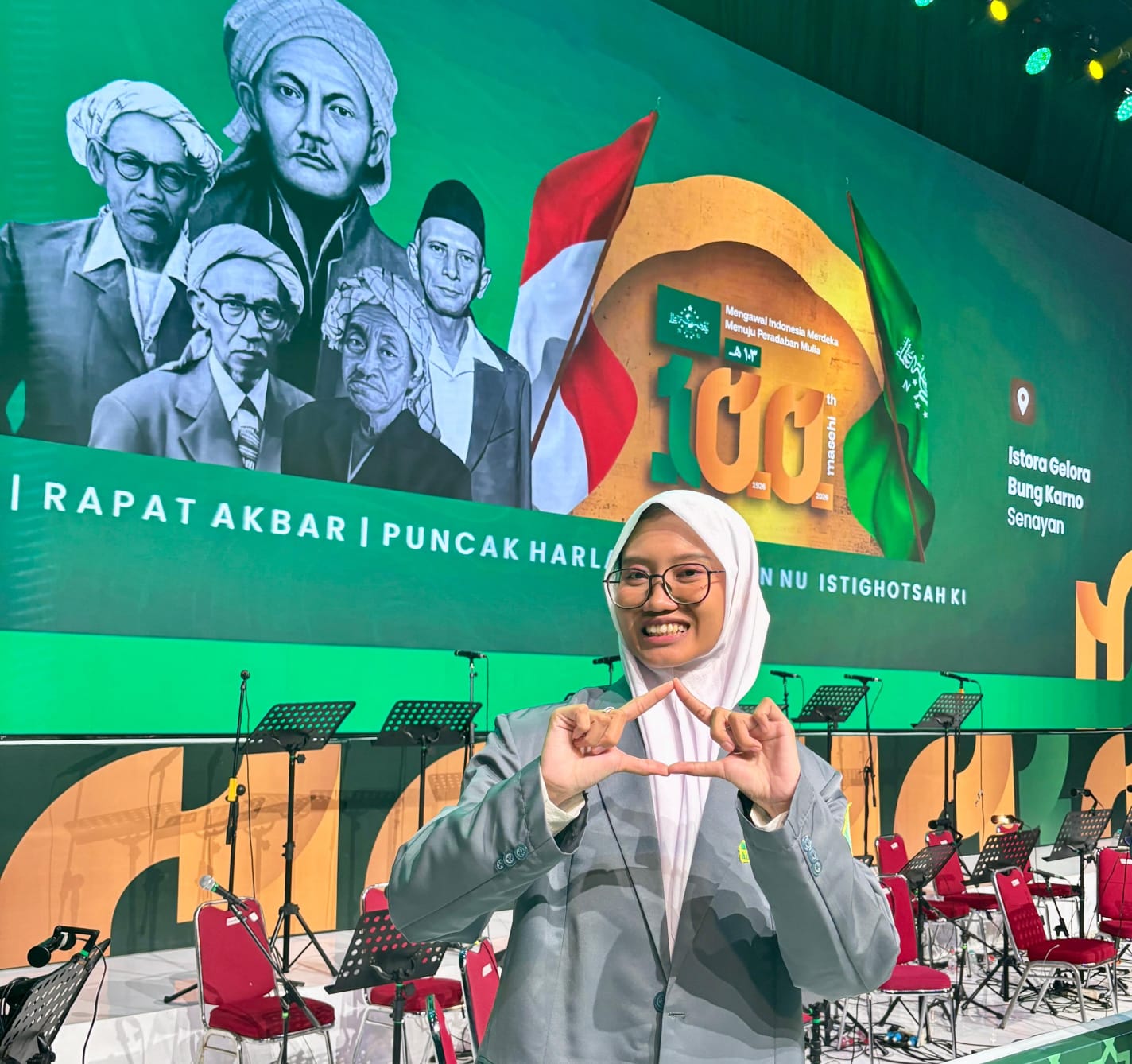
Nafi'atul Ummah is a member of PMII (the Indonesian Islamic Student Movement) in Ciputat and an alumna of Matholi'ul Falah Islamic Boarding School.
By Nafi’atul Ummah
Member of PMII (the Indonesian Islamic Student Movement) in Ciputat and an alumna of Matholi’ul Falah Islamic Boarding School
As Nahdlatul Ulama (NU), Indonesia’s largest Islamic organization, approaches its upcoming national congress (Muktamar), public attention has increasingly focused on the names emerging in the contest for the organization’s highest leadership.
Yet the most important question facing NU is not simply who will become its next leader.
The deeper issue is whether the organization remains committed to its long-standing tradition of leadership cultivation as the cornerstone of institutional regeneration. The future of NU will ultimately be determined not only by electoral outcomes but by whether it continues to trust the cadre-building process that has sustained the organization for more than a century.
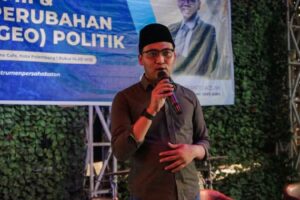
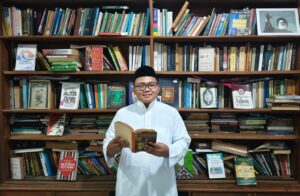
It is within this broader context that the emergence of Gus Hery Haryanto Azumi deserves careful attention.
His significance lies not merely in his place within NU’s internal political dynamics, but in what his career represents. Rather than emerging suddenly through political opportunity or elite patronage, Gus Hery embodies a leadership trajectory built upon decades of organizational service and systematic cadre development.
His journey—from an activist in the Indonesian Islamic Student Movement (PMII) to Chairman of its National Executive Board (Pengurus Besar PMII), later serving in the Executive Board of Nahdlatul Ulama (PBNU), and continuing his involvement across various Nahdliyin institutions—illustrates a leadership path forged through dedication, institutional learning, and sustained commitment.
This observation is not primarily about Gus Hery as an individual.
Instead, his emergence serves as a lens through which a more fundamental question about NU can be examined: Does the organization still provide sufficient opportunities for leaders who have grown through its own cadre system to assume positions of strategic leadership?
The question is especially relevant because NU’s institutional history has always been inseparable from its tradition of cadre formation.
For more than a century, Islamic boarding schools (pesantren) have served as the foundation for nurturing religious scholarship and social leadership. Alongside them, organizations such as the Nahdlatul Ulama Student Association (IPNU), the Nahdlatul Ulama Female Student Association (IPPNU), PMII, the Nahdlatul Ulama Scholars Association (ISNU), and numerous other affiliated bodies have functioned as training grounds where future leaders acquire organizational experience while internalizing NU’s religious values, intellectual traditions, and spirit of service.
These institutions have done more than produce organizational administrators. They have cultivated generations capable of preserving the continuity of NU’s religious heritage while adapting to changing social and political realities.
For this reason, discussions about NU’s future should not revolve solely around who enjoys the greatest popularity or possesses the strongest political influence within the organization’s elite circles.
The more fundamental challenge is ensuring that cadre development remains the principal pathway through which leadership is renewed.
Healthy institutions do not entrust their future to individuals who merely possess greater political access or material resources. Rather, they rely on those who have demonstrated competence, integrity, and loyalty through years of service within the organization itself.
From Grassroots Cadre to National Leadership: The Long Journey of an Organization’s Own Sons and Daughters
The relationship between cadre development and leadership succession is not always straightforward.
Many organizations face a paradox. They invest heavily in cultivating future leaders, yet the very individuals shaped through these processes are not always the ones entrusted with leadership when succession arrives.
Young members undergo years of structured education, organizational assignments, and voluntary service. They learn the institution from its lowest levels, shoulder responsibilities across different stages of their careers, and gradually accumulate experience.
However, when leadership positions become available, the decisive factors are often no longer organizational merit or years of dedication.
Instead, access to elite networks, political alliances, and institutional influence frequently become the determining variables.
This phenomenon is hardly unique to Nahdlatul Ulama.
Across civil society organizations, religious institutions, political movements, and even universities, leadership succession increasingly reflects the dynamics of elite competition rather than the outcomes of systematic leadership cultivation.
When this occurs, cadre development risks becoming little more than a ceremonial exercise—maintained as tradition but disconnected from its most strategic purpose: producing the next generation of institutional leaders.
The consequences should not be underestimated.
When years of service no longer bear a meaningful relationship to opportunities for leadership, trust in the organization gradually begins to erode.
Young cadres inevitably start asking difficult questions.
What is the value of dedicating years to organizational service if competence, commitment, and proven loyalty are no longer the primary criteria for leadership?
A truly resilient institution is distinguished not merely by its ability to produce large numbers of members, but by its capacity to connect leadership development with genuine opportunities for advancement.
Without that connection, cadre development produces followers rather than future leaders.
Senang sekali Anda memilih format bertahap. Saya tetap mempertahankan gaya editorial internasional agar artikelnya terasa seperti opini yang memang ditulis dalam bahasa Inggris, bukan hasil terjemahan.
The Crisis of Leadership Renewal in the Age of Elite Politics
The disconnect between leadership development and succession is neither a new nor uniquely Indonesian phenomenon. It has long attracted the attention of political scientists and sociologists who seek to understand why organizations gradually lose their capacity for self-renewal.
One of the most influential explanations came from the Italian sociologist Vilfredo Pareto in his landmark work The Mind and Society (1935). Pareto argued that every organization, regardless of its ideals or structure, will inevitably produce an elite responsible for making strategic decisions. The existence of elites, in his view, is neither abnormal nor inherently problematic.
The real danger arises when those elites cease to regenerate themselves.
Pareto introduced the concept of the “circulation of elites,” arguing that healthy institutions continuously allow new, capable individuals to rise through their ranks. Leadership renewal is therefore not merely a question of replacing one person with another; it is an essential mechanism for preserving an organization’s vitality and legitimacy.
As Pareto warned:
“When governing or non-governing elites attempt to close themselves to the influx of newer and more capable elements from the underlying population, the circulation of elites is impeded and the social order will decay.”
His observation remains remarkably relevant today.
The greatest threat facing an organization is not the absence of talented people. Rather, it is the stagnation of leadership renewal.
An organization may appear stable from the outside while quietly losing its ability to adapt from within. New generations of capable members find themselves unable to break into positions of leadership, while the institutional machinery of cadre development becomes increasingly detached from the actual distribution of authority.
In such circumstances, leadership succession ceases to reward merit and instead reinforces existing concentrations of influence.
This is precisely why the issue deserves careful reflection within Nahdlatul Ulama.
As the largest Muslim organization in Indonesia—and one of the largest Islamic civil society organizations in the world—NU possesses extraordinary human capital. Its vast network of pesantren, millions of members, and numerous affiliated educational, religious, and social institutions provide an unparalleled reservoir of future leaders.
The organization has never lacked talented individuals.
Its challenge lies elsewhere.
The critical question is whether the elaborate system of cadre development that NU has painstakingly built over generations remains genuinely connected to the process through which leadership is renewed.
Cadre development derives its meaning not simply from educating committed members but from creating a credible pathway through which dedication, competence, and organizational experience can ultimately translate into positions of responsibility.
If that connection weakens, the consequences extend far beyond individual disappointment.
Young cadres inevitably begin to reassess how leadership is actually attained.
Instead of believing that commitment and years of service determine one’s prospects, they may conclude that proximity to influential figures, political alliances, or informal patronage networks matter far more than merit.
Once such perceptions become widespread, the organization risks losing one of its most valuable assets: the confidence of its own members in the fairness of its internal system.
Institutional legitimacy does not depend solely on formal rules.
It depends equally on the collective belief that those rules are applied consistently and that every committed member has a meaningful opportunity to contribute at the highest levels of leadership.
For an organization such as NU, whose historical strength has always rested upon moral authority as much as organizational capacity, maintaining that belief is indispensable.
Leadership renewal, therefore, should never be understood as a routine transfer of office.
It is fundamentally an exercise in preserving institutional meritocracy.
Only by ensuring that leadership remains connected to the organization’s own cadre system can NU continue to renew itself while safeguarding the religious traditions, intellectual heritage, and social legitimacy that have defined it for more than a century.
Within this broader framework, the emergence of Gus Hery Haryanto Azumi acquires significance beyond the fortunes of any individual candidate.
His long journey through PMII, the leadership of its National Executive Board, and subsequently within PBNU reflects a pathway that many organizations aspire to preserve but often struggle to sustain: a leadership trajectory shaped by years of service rather than by sudden political ascent.
Whether or not he ultimately occupies the organization’s highest office is, in many ways, secondary.
The more consequential issue is what his candidacy symbolizes.
It serves as a reminder that Nahdlatul Ulama still possesses leaders whose credibility has been forged through institutional experience, organizational discipline, and sustained commitment to the values of the organization.
That reminder is especially important at a time when many civil society organizations around the world are confronting similar tensions between organizational merit and elite politics.
Beyond One Individual: What Gus Hery Represents for NU’s Future
Ultimately, the significance of Gus Hery Haryanto Azumi does not lie in his personal ambitions or in whether he eventually becomes chairman of Nahdlatul Ulama.
Reducing the discussion to the fate of a single individual would miss the larger point.
His emergence is better understood as a symbol of a much broader institutional question: Does Nahdlatul Ulama still believe that leadership should emerge through a long process of learning, service, and organizational commitment?
This question extends far beyond one congress or one election.
It speaks directly to the future character of NU itself.
Throughout its history, Nahdlatul Ulama has never relied solely on charismatic personalities. Its remarkable endurance has been built upon institutions capable of transmitting values across generations. Pesantren, student organizations, youth movements, scholarly associations, and countless local branches have functioned as interconnected spaces where religious knowledge, organizational experience, and public service are cultivated simultaneously.
That ecosystem has allowed NU to remain resilient through changing political eras—from colonial rule and independence to authoritarianism and democratic transition.
Such institutional resilience did not emerge by accident.
It was sustained by generations of individuals who dedicated themselves to the organization long before they were entrusted with positions of leadership.
This is the deeper meaning behind what many Nahdliyin describe as “anak kandung organisasi”—literally, the organization’s own sons and daughters.
The phrase should not be interpreted in terms of bloodline or personal relationships.
Rather, it refers to those who have grown within the organization itself, learning its culture from the grassroots, understanding its traditions through experience, and embracing its responsibilities through years of service.
Every healthy institution should create opportunities for such individuals.
This does not mean that leadership must always be reserved exclusively for insiders.
Nor does it imply that seniority alone should determine succession.
Instead, it reflects a more fundamental principle: organizations thrive when they establish transparent, merit-based pathways through which dedication, competence, and integrity are genuinely rewarded.
For Nahdlatul Ulama, preserving this principle is particularly important.
As one of the world’s largest Muslim civil society organizations, NU’s influence extends well beyond Indonesia’s borders. It has become internationally recognized for promoting moderate Islam, religious tolerance, democratic participation, and peaceful coexistence.
Maintaining that moral authority requires more than respected religious scholarship.
It also requires leadership institutions that remain credible in the eyes of their own members.
This is why the debate surrounding NU’s future should never be reduced to personalities or political alignments alone.
The more consequential question is whether the organization continues to nurture a culture in which leadership is viewed as the culmination of service rather than the product of political maneuvering.
If cadre development ceases to function as the primary avenue for leadership renewal, the consequences may not be immediately visible.
Organizations rarely decline overnight.
More often, they experience a gradual erosion of trust.
Young members become less convinced that commitment matters.
Institutional loyalty weakens.
The connection between generations slowly fades.
Eventually, the organization loses not its membership, but its capacity to renew itself.
That is precisely why Vilfredo Pareto’s warning remains strikingly relevant nearly a century after it was written.
He famously observed that “history is a graveyard of aristocracies.”
His point was not simply that elites eventually disappear.
Rather, every institution that refuses to renew itself through capable new generations ultimately risks becoming obsolete.
The lesson for Nahdlatul Ulama is both timely and clear.
The organization’s greatest strength has never rested solely on the prominence of individual leaders.
Its true strength lies in its ability to connect scholarship, religious tradition, organizational discipline, and leadership regeneration into a continuous chain stretching across generations.
In this light, Gus Hery’s emergence should not be viewed merely as another episode in NU’s internal political contest.
Instead, it offers an opportunity for reflection.
It reminds the organization that the true measure of successful cadre development is not how many members it educates, but whether it possesses the courage to entrust its future to those who have earned that responsibility through integrity, competence, and lifelong service.
As NU prepares for another chapter in its long history, the challenge is therefore not simply to choose its next chairman.
The greater challenge is to ensure that its next generation of leaders continues to emerge from the values, institutions, and traditions that have sustained Nahdlatul Ulama for more than a century.
Because, in the end, the future of NU will not be determined by who wins a leadership contest.
It will be determined by whether the organization remains faithful to the very process that has always made its leadership legitimate.
(*)