A New Helmsman for NU: Seeking Visionary Leadership for Nahdlatul Ulama’s Second Century
As Nahdlatul Ulama enters its second century, visionary leadership will be crucial to strengthen moderation, digital transformation, and global engagement.
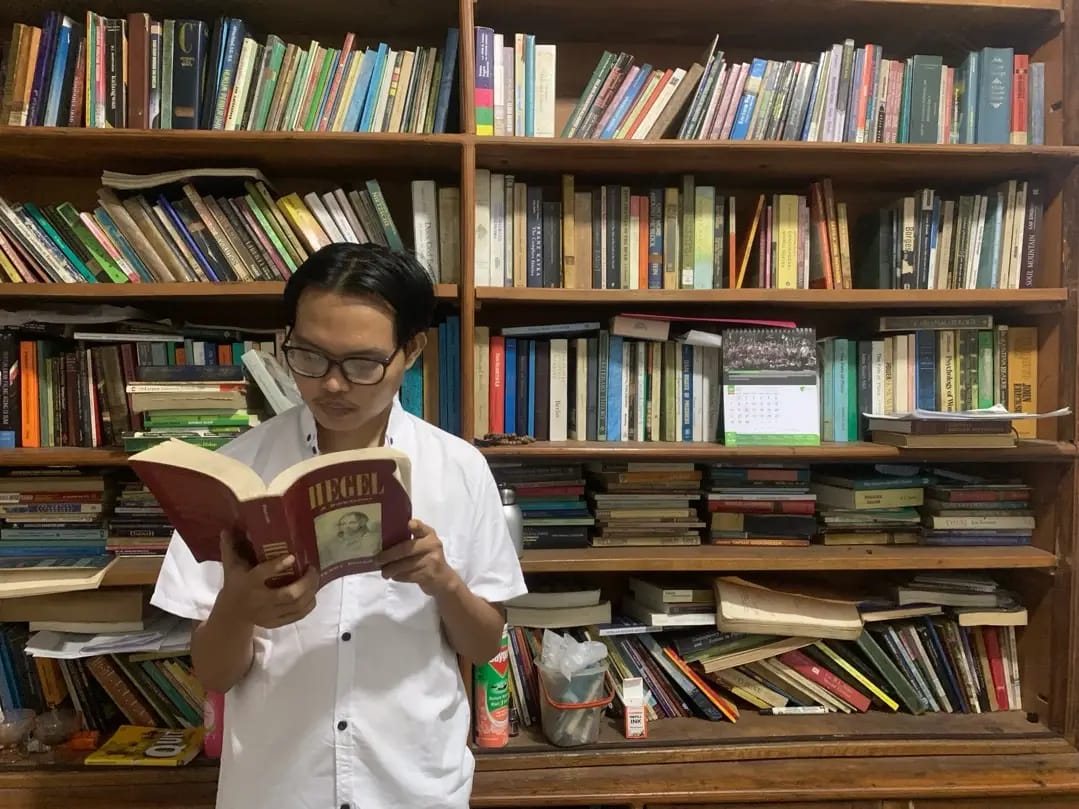
Aji Pangestu, Young NU Cadre and Alumnus of Mambaul Hidayah Islamic Boarding School, Blitar.
By Aji Pangestu
Young NU Cadre and Alumnus of Mambaul Hidayah Islamic Boarding School, Blitar
As Nahdlatul Ulama (NU) enters its second century, the organization stands at a defining moment in its history. For nearly a hundred years since its establishment in 1926, NU has served as Indonesia’s largest Islamic organization and one of the country’s most influential social institutions. Its contribution extends far beyond religious affairs, encompassing the preservation of national unity, democratic values, religious moderation, and Indonesia’s pluralistic identity.
Today, however, NU faces a vastly different landscape from the one it encountered during its first century. Rapid technological transformation, political polarization, digital disruption, and the growing influence of transnational ideological movements have reshaped societies worldwide. These developments demand not only institutional resilience but also visionary leadership capable of guiding NU through increasingly complex global and domestic challenges.
The organization’s historical role as a guardian of moderate Islam has never been more relevant. At a time when identity politics and religious extremism continue to challenge social cohesion across many countries, NU carries an even greater responsibility to promote Islam Wasathiyah—an inclusive, moderate interpretation of Islam that embraces diversity while maintaining strong religious principles.
Meeting these challenges requires leadership that combines deep religious scholarship with modern organizational management, international engagement, and strategic vision. Without transformative leadership, NU risks becoming overly attached to its historical achievements rather than positioning itself as a driving force for Indonesia’s future.
The upcoming 35th NU Congress therefore represents far more than an internal leadership transition. It offers a historic opportunity to define the organization’s direction for its second century.
Beyond Popularity: Choosing the Right Leader
Leadership succession within NU should not be determined merely by popularity or public visibility. The organization requires an individual capable of preserving its moral authority while responding effectively to contemporary realities.
Within this context, Gus Hery Haryanto Azumi has increasingly emerged as one of the figures considered capable of providing such leadership.
Several essential qualities should define NU’s future leadership.
The first is moral integrity and political independence. NU’s leadership must maintain equal distance from competing political interests to preserve the organization’s historical role as an independent religious and social institution rather than becoming an instrument of short-term political agendas.
This principle resonates with German philosopher Jürgen Habermas in The Theory of Communicative Action (1981), where he argues that social institutions built upon shared values and traditions can become “colonized” when dominated by political power and economic interests.
Should NU lose its institutional independence, its long-standing traditions of Islamic scholarship, pesantren culture, and public service could gradually be overshadowed by political pragmatism.
From this perspective, Gus Hery’s background reflects a strong commitment to ideological movements rooted in NU’s traditions while maintaining organizational autonomy. Such qualities are increasingly important if NU is to remain Indonesia’s moral compass and retain the trust of millions of Nahdliyin members.
Leading Organizational Transformation in the Digital Era
Equally important is the ability to modernize organizational governance.
As one of the world’s largest Islamic organizations, NU requires governance systems capable of managing millions of members efficiently within an increasingly digital society.
Donald Sull’s Organizational Agility Theory argues that institutional longevity in times of disruption depends less on organizational size than on adaptability. Large institutions that fail to embrace technological change often suffer from bureaucratic inefficiency, slow decision-making, and declining public relevance.
For NU, digital transformation is no longer optional. Integrated data management, transparent governance, and more effective communication systems should become strategic priorities during its second century.
Supporters believe Gus Hery’s vision aligns closely with these needs. His engagement with younger generations and his emphasis on organizational modernization suggest an approach focused on making NU more transparent, efficient, and responsive without compromising its traditional values.
Strengthening NU’s Global Role
Another crucial dimension of future leadership lies in international diplomacy.
In today’s increasingly interconnected world, NU possesses significant potential to strengthen its position as a global representative of moderate Islam.
Political scientist Joseph Nye, through his concept of Soft Power in Soft Power: The Means to Success in World Politics (2004), argues that international influence increasingly depends on the attractiveness of values, ideas, and culture rather than solely on military or economic capabilities.
NU possesses precisely those assets. As the world’s largest Muslim organization, it has both credibility and moral authority to contribute to global conversations on peacebuilding, religious coexistence, sustainable development, and humanitarian cooperation.
Realizing that potential, however, requires leaders capable of connecting international issues with local community needs.
In the author’s assessment, Gus Hery’s involvement through the ISNU Forum on Investment, Trade and Global Affairs demonstrates his ability to build international networks while linking global concerns—including green economy initiatives and sustainable development—with the practical interests of Indonesian Muslims.
Empowering the Next Generation of Nahdliyin
Leadership renewal must also address generational transformation.
Sociologist Karl Mannheim argued in The Problem of Generations that each generation develops its worldview through distinct historical and technological experiences. Consequently, organizations that fail to bridge generational differences often struggle to sustain long-term regeneration.
This perspective is reinforced by Henry Mintzberg’s theories on organizational decentralization, which emphasize the importance of reducing excessive bureaucracy and creating broader opportunities for grassroots participation.
Indonesia’s younger Nahdliyin—particularly Millennials and Generation Z—seek organizations that encourage meaningful participation rather than passive compliance. They aspire to contribute through innovation, community engagement, entrepreneurship, and digital initiatives while remaining grounded in Islamic values.
Observers argue that Gus Hery’s close engagement with students and youth communities positions him well to bridge these generational dynamics. His leadership could strengthen communication between NU’s institutional structures and younger members while ensuring innovation remains firmly rooted in pesantren traditions.
Defining NU’s Second Century
The 35th NU Congress will likely become one of the most consequential moments in the organization’s modern history.
The challenges confronting NU today extend beyond internal governance. They concern Indonesia’s social cohesion, democratic resilience, religious moderation, and the organization’s growing contribution to global civilization.
Delegates therefore carry an immense responsibility in selecting leadership capable of safeguarding NU’s independence, accelerating digital transformation, strengthening international engagement, and empowering future generations.
In the author’s view, Gus Hery Haryanto Azumi represents a leader with the capacity to fulfill these responsibilities. His combination of organizational vision, commitment to institutional independence, international outlook, and engagement with younger generations offers a compelling foundation for leading Nahdlatul Ulama into its second century—ensuring that the organization continues to serve not only as Indonesia’s moral compass but also as a respected contributor to a more just, peaceful, and sustainable world.
June 25, 2026