The Future of Indonesia May Begin at NU’s Congress
For that reason, NU’s 35th Congress deserves to be understood not merely as an internal organizational event, but as one of the most consequential leadership transitions in Southeast Asia.
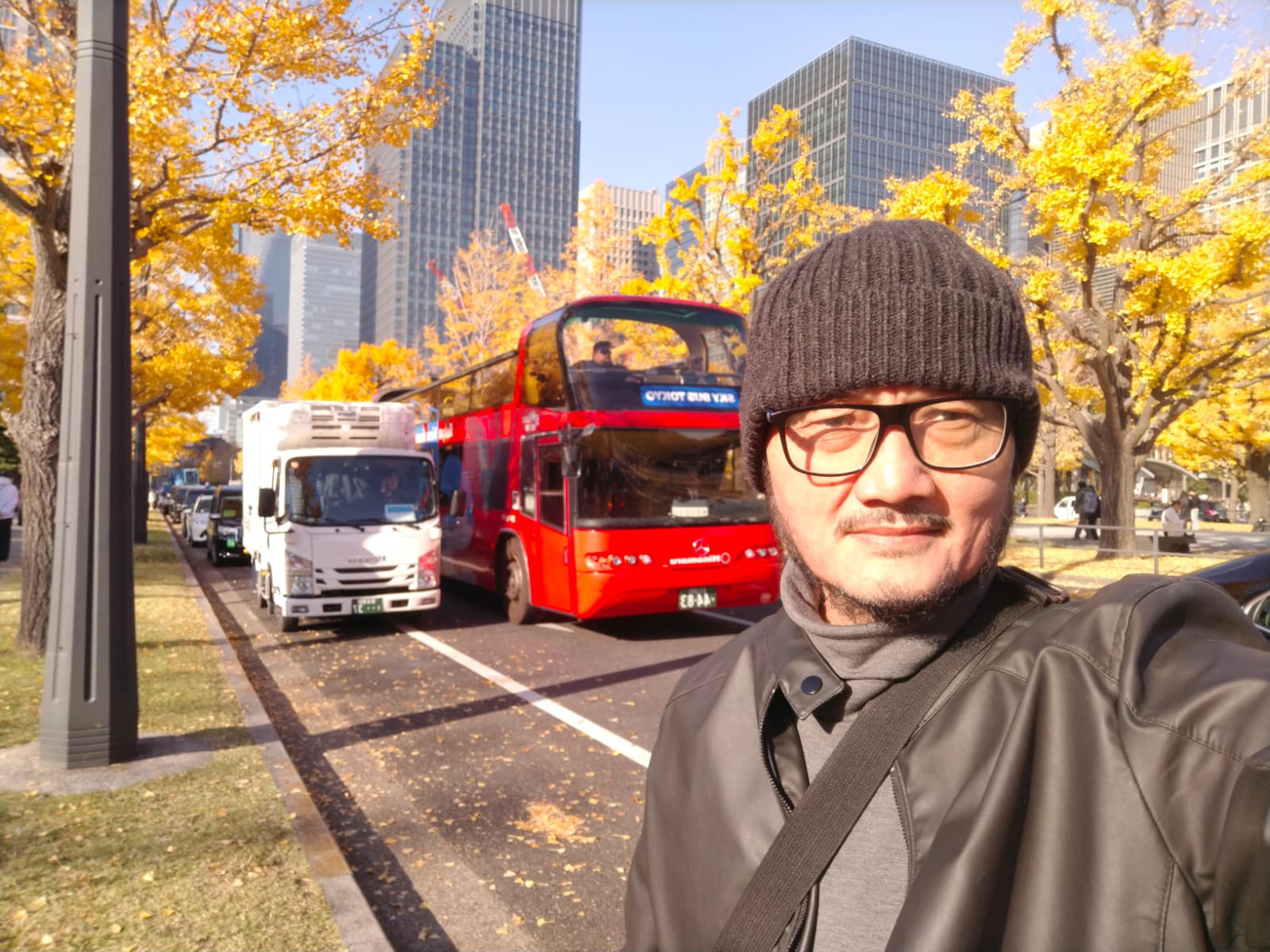
Samsul Muarif, the writer is a journalist, researcher on Indonesian politics, Nahdlatul Ulama, democracy and Islamic civil society and the author of “Gus Hery H. Azumi: Leading NU into Its Second Century”.
By Samsul Muarif *)
When Indonesians discuss the upcoming congress of Nahdlatul Ulama (NU), the world’s largest Muslim organization, the conversation often centers on a familiar question: Who will become the next chairman of the Executive Board (PBNU)?
That question, however, misses the larger story.
The real significance of NU’s 35th National Congress, scheduled for August 2026, extends well beyond an internal leadership contest. It will influence how Indonesia’s largest Islamic civil society organization responds to profound global transformations—from artificial intelligence and demographic change to geopolitical competition and the future of democratic governance. The outcome will also shape the relationship between religion, state and civil society as Indonesia moves toward the 2029 presidential election.
For international observers, NU is not merely another religious organization. With tens of millions of followers, thousands of Islamic boarding schools (pesantren), universities, hospitals, charitable foundations and community networks, NU represents one of the strongest pillars of Indonesian civil society. Few organizations anywhere in the Muslim world possess a comparable combination of religious authority, social legitimacy and institutional reach.
This is precisely why NU’s leadership transition deserves attention beyond Indonesia.
Throughout its first century, NU demonstrated a remarkable ability to reconcile Islamic tradition with democratic citizenship. Scholars such as Robert W. Hefner have described NU as one of the most important contributors to Indonesia’s democratic resilience, while Greg Barton has highlighted its capacity to adapt to changing political and social environments without abandoning its traditional roots. NU’s influence has never rested solely on theology. It has also derived from its ability to mediate conflict, promote moderation and maintain social cohesion in a country defined by extraordinary diversity.
The challenge facing NU today, however, differs fundamentally from those of its founding generation.
When NU was established in 1926, Indonesia was still under colonial rule. During much of the twentieth century, its leaders focused on preserving Islamic scholarship, defending national independence and strengthening religious education. The twenty-first century presents a different landscape. Artificial intelligence is transforming labor markets and education. Digital platforms are reshaping religious authority. Climate change, economic uncertainty and intensifying geopolitical rivalry are redefining national priorities. Indonesia’s demographic bonus offers enormous opportunities but also demands higher-quality education, stronger institutions and more adaptive leadership.
In this context, NU’s second century cannot be guided solely by the logic that sustained its first.
Management thinker Peter Drucker famously argued that the greatest danger in times of turbulence is acting with yesterday’s logic. The same observation applies to large religious organizations. Historical legitimacy alone is insufficient. Institutions that wish to remain influential must continually renew their leadership, governance and strategic vision while preserving their core values.
This is where NU’s upcoming congress becomes especially significant.
The leadership race is not simply about selecting an administrator for a five-year term. It is about choosing the strategic direction of an institution whose decisions resonate far beyond its formal membership. The next PBNU chairman will help determine how NU engages with technological change, economic empowerment, religious education, interfaith dialogue and Indonesia’s broader democratic development.
Importantly, NU’s influence should not be misunderstood as partisan political power.
Since returning to its Khittah (1926 Charter) in 1984, NU has consistently defined itself as a socio-religious organization rather than a political party. Yet its moral authority inevitably shapes public discourse. Its scholars, educators and community leaders influence millions of Indonesians through persuasion rather than electoral mobilization. In Robert Putnam’s terms, NU represents a vast reservoir of social capital — a network of trust, civic engagement and community cooperation that strengthens democratic institutions.
This explains why every Indonesian government has regarded NU as an indispensable partner in addressing national challenges. Such a relationship should not be interpreted as subordination or political alignment. Mature democracies depend on constructive partnerships between the state and independent civil society organizations. Governments benefit from credible religious institutions capable of promoting social stability, while those institutions maintain their legitimacy by preserving organizational autonomy and moral independence.
Against this backdrop, the upcoming leadership contest has naturally attracted considerable public attention. Several prominent figures from different backgrounds have emerged as potential candidates, reflecting distinct visions for NU’s future. Some represent continuity with the current leadership. Others bring experience from government, electoral politics or the organization’s internal cadre system. The diversity of candidates illustrates a healthy debate over how NU should navigate its second century rather than a simple contest of personalities.
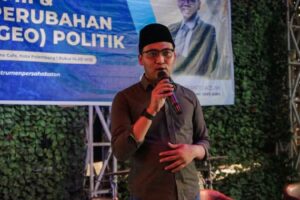
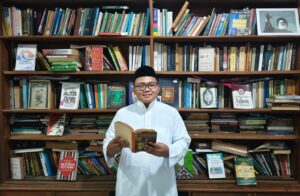
One emerging figure attracting increasing attention is Gus Hery Haryanto Azumi. His profile differs from several better-known national figures because it emphasizes long-term organizational cadre development within NU itself. Having served in leadership roles in the Indonesian Islamic Students Movement (PMII) and later within NU’s organizational structure, he has consistently framed his public vision around institutional renewal, leadership regeneration and strengthening NU’s role as a global center of moderate Islam. While it remains for NU’s delegates — not outside observers — to determine whether this vision will gain broader support, his emergence reflects a wider conversation inside NU about generational transition and organizational adaptation.
The broader question, therefore, is not which individual ultimately prevails.
It is whether NU chooses continuity, gradual adaptation or a more ambitious agenda of institutional transformation.
The answer matters not only for Indonesia’s Muslim community but also for the country’s democratic future. As Indonesia approaches the 2029 presidential election, the quality of its civil society institutions will be as important as the quality of its political parties. A strong, independent and forward-looking NU can continue to serve as a stabilizing force, a promoter of religious moderation and a bridge between tradition and modernity.
For that reason, NU’s 35th Congress deserves to be understood not merely as an internal organizational event, but as one of the most consequential leadership transitions in Southeast Asia. The choices made in August 2026 will shape how the world’s largest Muslim organization enters its second century — and, in many respects, how Indonesia navigates its own democratic future. []
*) The writer is a journalist, researcher on Indonesian politics, Nahdlatul Ulama, democracy and Islamic civil society and the author of “Gus Hery H. Azumi: Leading NU into Its Second Century”.