Indonesia Needs a Working Vice-President, not Another Political Arrangement
The successor to Gibran must serve the nation, strengthen governance, and deliver results—not merely satisfy political parties and elite interests.
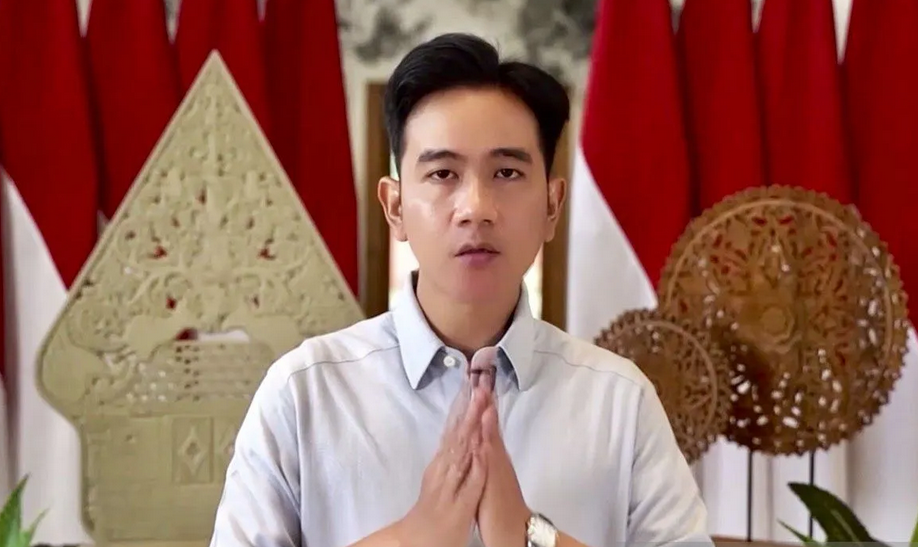
Indonesia is entering an important political transition following the resignation of Vice-President Gibran Rakabuming Raka on November 12, 2026. The search for his successor has quickly become a subject of national debate, attracting attention from political parties, the media, civil society, and international observers.
By Samsul Muarif *)
Indonesia is entering an important political transition following the resignation of Vice-President Gibran Rakabuming Raka on November 12, 2026. The search for his successor has quickly become a subject of national debate, attracting attention from political parties, the media, civil society, and international observers.
Among the names circulating in political discussions is Sufmi Dasco Ahmad, a senior Gerindra politician and Deputy Speaker of the House of Representatives. Other figures mentioned include Sugiono and Ahmad Muzani, both senior members of Gerindra. Earlier international coverage also highlighted Puan Maharani, Speaker of the House of Representatives and a prominent figure in the Indonesian Democratic Party of Struggle (PDI-P).
The discussion has moved beyond speculation. Reports by The Straits Times, The Star, and Indonesian media illustrate how the selection process is closely connected to political consolidation, coalition management, presidential trust, and the balance of power ahead of the 2029 election.
Yet one fundamental question risks being overshadowed by the political bargaining:
What kind of Vice-President does Indonesia actually need?
The country does not simply need someone who can occupy the vacant constitutional office. It needs a leader who can contribute meaningfully to national governance, strengthen the effectiveness of the administration, and help address the real challenges facing more than 280 million Indonesians.
The next Vice-President should be selected not merely because a political party wants to secure its influence, a coalition needs to maintain its balance, or an individual enjoys the confidence of influential political circles. The overriding consideration must be the national interest.
A Political Contest with National Consequences
The names emerging from the current discussion reflect different political considerations.
In its November 13 report, The Straits Times identified Sugiono, Ahmad Muzani, and Puan Maharani as prominent figures in the early succession debate. The report described the political calculations surrounding loyalty, parliamentary networks, coalition stability, and the possible implications for the 2029 presidential election.
A subsequent report by The Star on November 16 highlighted three senior Gerindra figures: Sufmi Dasco Ahmad, Sugiono, and Ahmad Muzani. It described Dasco as an influential political operator within Prabowo’s circle, while Sugiono was associated with the President’s political and ideological trust, and Muzani with his extensive parliamentary networks.
Indonesian media have also reported growing support for Dasco among several Gerindra regional representatives. These developments indicate that his name has become an important part of the public discussion, although no official presidential nomination has been announced.
The coalition’s apparent willingness to leave the choice to President Prabowo is another significant development. It may reduce competition among coalition partners, but it also raises a broader question: will the selection primarily serve the political consolidation of the governing alliance, or will it be guided by a more comprehensive assessment of national leadership requirements?
Political stability is important. A President needs a reliable working partner, and a governing coalition requires sufficient cohesion to implement its programmes.
However, political stability should not become an end in itself.
A government can enjoy broad parliamentary support and still struggle to deliver effective public services, improve economic opportunities, strengthen law enforcement, or reduce inequality. A large political coalition does not automatically translate into good governance.
Indonesia must therefore avoid reducing the vice-presidential selection to a distribution of political positions among parties and influential groups.
The Dasco Discussion and the Question of Leadership
Sufmi Dasco Ahmad’s name deserves to be understood within the context of his political position and experience.
As Deputy Speaker of the House of Representatives and a senior Gerindra figure, he has been involved in parliamentary politics and the management of relations among political forces. His supporters have pointed to his loyalty to Prabowo, political coordination skills, and ability to communicate with different groups.
These are relevant considerations in a political system where the relationship between the executive and legislature has a significant influence on the implementation of national policy.
But political coordination and executive governance are not identical.
The office of Vice-President requires more than the ability to build political agreements. It requires an understanding of public administration, national development, economic and social policy, constitutional responsibilities, and the complexity of governing a diverse country.
The same standard should apply to every potential candidate, whether from Gerindra, another political party, or outside party politics.
The public should not be asked to judge a candidate solely by his closeness to the President, his position within a political party, or the strength of his political network.
The more important questions are: What can the candidate contribute to the government? What responsibilities can be entrusted to him or her? What policy areas can be improved? And how will the public measure the results?
These questions should be central to the national conversation.
A Civilian, a Party Politician, or a Technocrat?
There has also been discussion on social media, including a TikTok video cited in material circulating publicly, claiming that the United States favours a civilian candidate for Indonesia’s next Vice-President.
Such a claim should be treated cautiously. No verifiable official statement from the United States government identifying a preferred Indonesian vice-presidential candidate, or prescribing that the successor must be a civilian, has been established in the sources reviewed for this analysis.
It is important not to confuse commentary, speculation, or interpretations circulating on social media with an official foreign-government position.
More fundamentally, Indonesia’s constitutional decision must remain an Indonesian decision. Foreign governments may have legitimate interests in Indonesia’s political stability, regional security, economic policies, and international partnerships. However, the choice of the country’s Vice-President belongs to Indonesia’s constitutional institutions.
The distinction between a civilian and a military background can be part of a legitimate public discussion, particularly when considering the country’s democratic development and civil-military relations. But professional background alone cannot determine whether someone will perform effectively in the office.
A civilian politician is not automatically a capable administrator. A technocrat is not automatically a successful national leader. Equally, a person with a military background should not be judged solely by that background.
What matters is a candidate’s demonstrated record, integrity, constitutional commitment, ability to work within democratic institutions, and capacity to contribute to national development.
Indonesia needs a Vice-President who understands that the state belongs to all citizens, not to a party, political network, or particular group.
The Constitutional Office Must Have Meaningful Responsibilities
The Indonesian Constitution provides the institutional basis for the Vice-President’s position.
Article 4, paragraph (2), of the 1945 Constitution states that the President, in exercising the powers of government, is assisted by a Vice-President. Article 8, paragraph (2), provides that when the vice-presidential office becomes vacant, the People’s Consultative Assembly (MPR) convenes within 60 days to elect a replacement from two candidates nominated by the President.
The constitutional mechanism is clear. The President proposes two candidates, and the MPR elects one of them.
The question, however, is not only who will be elected, but what the new Vice-President will actually do once appointed.
In practice, the effectiveness of the Vice-President depends significantly on the responsibilities assigned by the President and the ability of both leaders to work within a clear institutional framework.
A Vice-President should not become merely a ceremonial companion, a political representative, or an additional symbol of coalition accommodation.
The office should contribute directly to improving government performance.
The President could establish a clear division of responsibilities, assigning the Vice-President measurable priorities in areas such as:
Economic transformation and job creation: coordinating efforts to improve productivity, strengthen domestic industries, expand investment opportunities, and create quality employment.
Human development: supporting improvements in education, healthcare, vocational training, research, and the development of Indonesia’s human capital.
Social justice and regional development: accelerating programmes that address inequality, strengthen local economies, and improve opportunities in rural, coastal, island, and border communities.
Institutional reform and public accountability: supporting better coordination among government institutions, stronger public-service standards, and transparent implementation of national policies.
Food and energy security: helping coordinate long-term strategies for food production, energy diversification, and the development of sustainable domestic resources.
International cooperation: assisting the President in strengthening Indonesia’s diplomatic engagement, economic partnerships, and regional leadership.
These responsibilities should be accompanied by clear targets, adequate institutional support, regular reporting, and public accountability.
A Vice-President who has a defined portfolio and measurable responsibilities can become a genuine contributor to national progress.
Beyond Political Loyalty: The Need for National Competence
Loyalty is an important element of any working relationship between a President and Vice-President. The President must be able to trust the person who assists in governing the country.
But loyalty should never be confused with unquestioning political obedience.
A strong Vice-President must be capable of offering constructive advice, identifying weaknesses in policy implementation, and communicating difficult realities to the President.
The role requires the ability to support presidential decisions while remaining committed to constitutional principles and the public interest.
Indonesia needs leaders who can work collaboratively without abandoning independent judgment. This is particularly important because the country faces challenges that cannot be solved through political coordination alone.
Economic inequality remains a concern. Employment opportunities must keep pace with the aspirations of a large and increasingly educated population. Education and healthcare require sustained improvement. Corruption and weaknesses in public institutions continue to affect public confidence. Regional disparities, food security, energy transition, and technological competition will shape Indonesia’s future.
The next Vice-President must understand these challenges as interconnected national priorities.
The position should not be treated as a political reward or compensation for loyalty. It is a constitutional responsibility that carries consequences for the country’s future.
Indonesia’s National Interest Must Come Before Party Interests
Indonesia’s political system inevitably involves negotiations among parties and coalitions. Political parties have legitimate interests, and parliamentary support is necessary for the government to implement its programmes.
Nevertheless, national leadership should not be reduced to the logic of political transactions.
The appointment of a Vice-President should not become an exercise in rewarding particular parties, accommodating influential groups, or securing the political future of individuals.
The consequences of such an approach could extend beyond the immediate succession process. It could weaken public confidence in the government’s commitment to merit, accountability, and national development.
A Vice-President should represent the constitutional interests of the Republic, not merely the political interests of the party from which he or she originates.
This does not mean that the Vice-President must be politically unaffiliated. A party background is not, by itself, an obstacle to effective leadership.
What matters is whether the person can rise above narrow party considerations once entrusted with a national office.
The distinction is fundamental: political support may help someone reach the office, but public service must define how that office is exercised.
The International Dimension: Credibility Matters
Indonesia’s political transition is also being watched by international partners, investors, and regional observers.
As Southeast Asia’s largest economy and an important member of ASEAN, Indonesia plays a significant role in regional stability, maritime security, global supply chains, and the broader Indo-Pacific environment.
The country is also seeking to strengthen its position in global economic cooperation while maintaining an independent and active foreign policy.
For international partners, the identity of the new Vice-President may matter, but the quality of governance matters much more.
They will be watching whether Indonesia can maintain policy consistency, uphold the rule of law, provide a predictable investment environment, strengthen institutional accountability, and manage its strategic relationships responsibly.
A Vice-President who contributes to effective coordination and credible policymaking can help strengthen confidence in Indonesia’s government.
Conversely, a selection process perceived as being driven exclusively by political bargaining could raise questions about whether national policy priorities are being subordinated to elite interests.
Indonesia should therefore approach the transition as an opportunity to reinforce the credibility of its democratic institutions and the quality of its national leadership.
A Test for President Prabowo’s Leadership
Ultimately, the decision rests on President Prabowo Subianto’s constitutional responsibility to submit two candidates to the MPR.
This is an opportunity to demonstrate that the government places national performance above political convenience.
Prabowo needs a Vice-President who can complement his leadership, strengthen the administration, and help ensure that government programmes produce tangible benefits for the people.
The ideal working relationship should be based on trust, clear responsibilities, professional cooperation, and shared commitment to the Constitution.
The President should also be willing to establish an institutional arrangement in which the Vice-President’s contribution can be evaluated transparently.
Such an arrangement would benefit not only the administration but also the public, which has a legitimate interest in knowing how the country’s highest executive leadership works and what results it delivers.
The selection should therefore be accompanied by a clear public commitment to governance, institutional integrity, and measurable national priorities.
The Office Belongs to the Nation
Indonesia’s next Vice-President will inherit an office at a time when public expectations are high and national challenges are increasingly complex.
The country needs more than political stability. It needs a government that works effectively, institutions that serve the public, an economy that creates opportunities, and leadership that understands the long-term interests of future generations.
Whoever is eventually selected—whether Dasco, Sugiono, Muzani, another political figure, or a candidate from outside party politics—the same standard should apply.
The candidate must be able to contribute meaningfully to the work of government, uphold constitutional principles, strengthen public accountability, and put the interests of Indonesia above personal or partisan ambitions.
The Vice-Presidency should never become merely another instrument for distributing political influence.
It must be an office of service, responsibility, and national contribution.
Indonesia does not need a Vice-President simply to complete the political configuration of the administration. It needs a Vice-President who can help make the government work better and deliver more for its people.
The ultimate measure of the next Vice-President will not be the political forces that helped bring him or her to office, but the contribution made to the future of Indonesia.
*) Writer and Journalist borderjournal.id