QUTB GLOBAL Calls for National Unity, Urges Indonesia to Become a Global Strategic Power
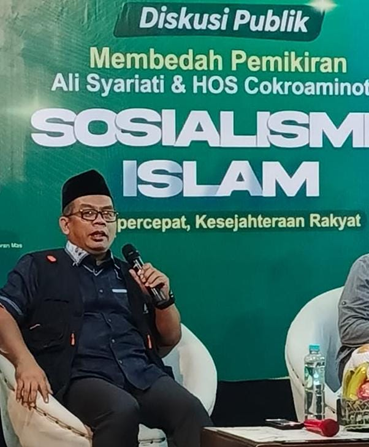
Gus Hery Haryanto Azumi, initiator of QUTB GLOBAL.
JAKARTA — Indonesia needs more than political stability to navigate a rapidly changing global order. National consolidation must be guided by a long-term geopolitical vision that enables the country to play a strategic role in shaping the future of global politics, trade, technology, and civilization, rather than remaining a passive observer.
That message was delivered by Gus Hery Haryanto Azumi, initiator of QUTB GLOBAL, in an official statement issued in Jakarta on Friday, November 13, 2026. He said current political developments, including the temporary vacancy in the vice-presidential office, should be handled wisely, with national unity and the public interest taking precedence over political considerations.
QUTB GLOBAL expressed its appreciation for the positions taken by President Prabowo Subianto and Gibran Rakabuming Raka in responding to the situation. It also called on all elements of Indonesian society to help maintain government stability and ensure the continuity of the national development agenda.
“Changes in national leadership should not become a source of division or a battleground for competing political interests. Instead, this moment should be used to strengthen solidarity, maintain government stability, and ensure the implementation of President Prabowo’s Asta Cita agenda,” Hery said.
However, he stressed that national consolidation should go beyond maintaining political and governmental stability. Indonesia needs a broader strategic orientation—one that strengthens its independence in making national decisions while expanding its influence in global geopolitics.
Against this backdrop, QUTB GLOBAL has introduced the concept of “Indonesia as a Global Strategic Axis”—a vision aimed at positioning the country as an influential force in shaping a more just, peaceful, and civilized international order.
Five Pillars of Indonesia’s Global Strategic Vision
Hery explained that the proposed vision rests on five interconnected strategic pillars.
First, Indonesia as a Global Center of Islamic Influence. Indonesia has strong historical and social foundations to promote a moderate, inclusive, and peace-oriented interpretation of Islam. The Islamic traditions of the Indonesian archipelago, which have developed alongside cultural and religious diversity, could make a meaningful contribution to the wider Muslim world.
Second, Indonesia as a Global Trade Hub. The country’s strategic geographical position should be better leveraged through the revitalization of the historic World Spice Route and the expansion of international trade networks. Indonesia, he argued, should move beyond being merely a consumer market and strengthen its position as a center of production, distribution, and global commerce.
Third, Indonesia as a Leader of the Global South. Indonesia should take a more prominent role in advancing the interests of developing countries. Stronger South-South cooperation could help promote a more equitable international economic and political order, based on equality and free from excessive domination by any single power.
Fourth, Indonesia as a Center of Global Civilization. The country’s cultural wealth, traditions, and religious diversity represent valuable assets for fostering dialogue among civilizations. Indonesia’s experience in managing pluralism could serve as an important contribution to global peace and humanitarian solidarity.
Fifth, Indonesia as a Center of Emerging Technologies. Mastering future technologies must become a national priority. Indonesia’s natural resources, strategic raw materials, and human capital need to be integrated into a broader strategy to strengthen domestic technological capabilities, innovation, and value-added industries.
According to Hery, these five pillars should not be treated as separate agendas. Rather, they form part of a broader national transformation designed to reinforce Indonesia’s sovereignty, resilience, and global competitiveness.
“Indonesia has enormous potential, ranging from its natural resources and strategic geographical position to its demographic strength and rich cultural and civilizational heritage. The challenge is how to integrate all these assets into a coherent national strength capable of exerting influence at the global level,” he said.
A Vision Beyond Five-Year Political Cycles
Hery further emphasized that Indonesia should not remain preoccupied with short-term political dynamics. The country needs a national vision that extends beyond leadership transitions and the five-year electoral cycle.
National development, he said, must be guided by long-term interests, policy continuity, and the ability to bring together the country’s diverse national resources and institutions.
“Indonesia cannot afford to remain absorbed in short-term political dynamics. We need a grand vision that goes beyond leadership changes and five-year political cycles. The national interest must serve as our common compass. It is time for Indonesia to emerge as a Global Strategic Axis, bringing messages of peace, justice, trade, technology, and humanity to the world,” he said.
QUTB GLOBAL has called on all elements of Indonesian society—including national leaders, political parties, the business community, academics, and civil society organizations—to make national consolidation a shared priority.
For the organization, domestic unity is the essential foundation for building strategic independence and expanding Indonesia’s international influence.
“Ultimately, the national interest must become the common ground that unites all national forces. We need an Indonesia that is strong at home, independent in determining its development path, and courageous enough to play a greater role in shaping the future of the world,” Gus Hery concluded. []