Returning Nahdlatul Ulama to Its Moral Compass: Why Gus Hery Haryanto Azumi Matters
As Indonesia’s largest Islamic organization approaches its 35th Congress, the debate is no longer simply about leadership. It is about whether Nahdlatul Ulama can reclaim the moral authority that has long defined its place in Indonesian democracy.
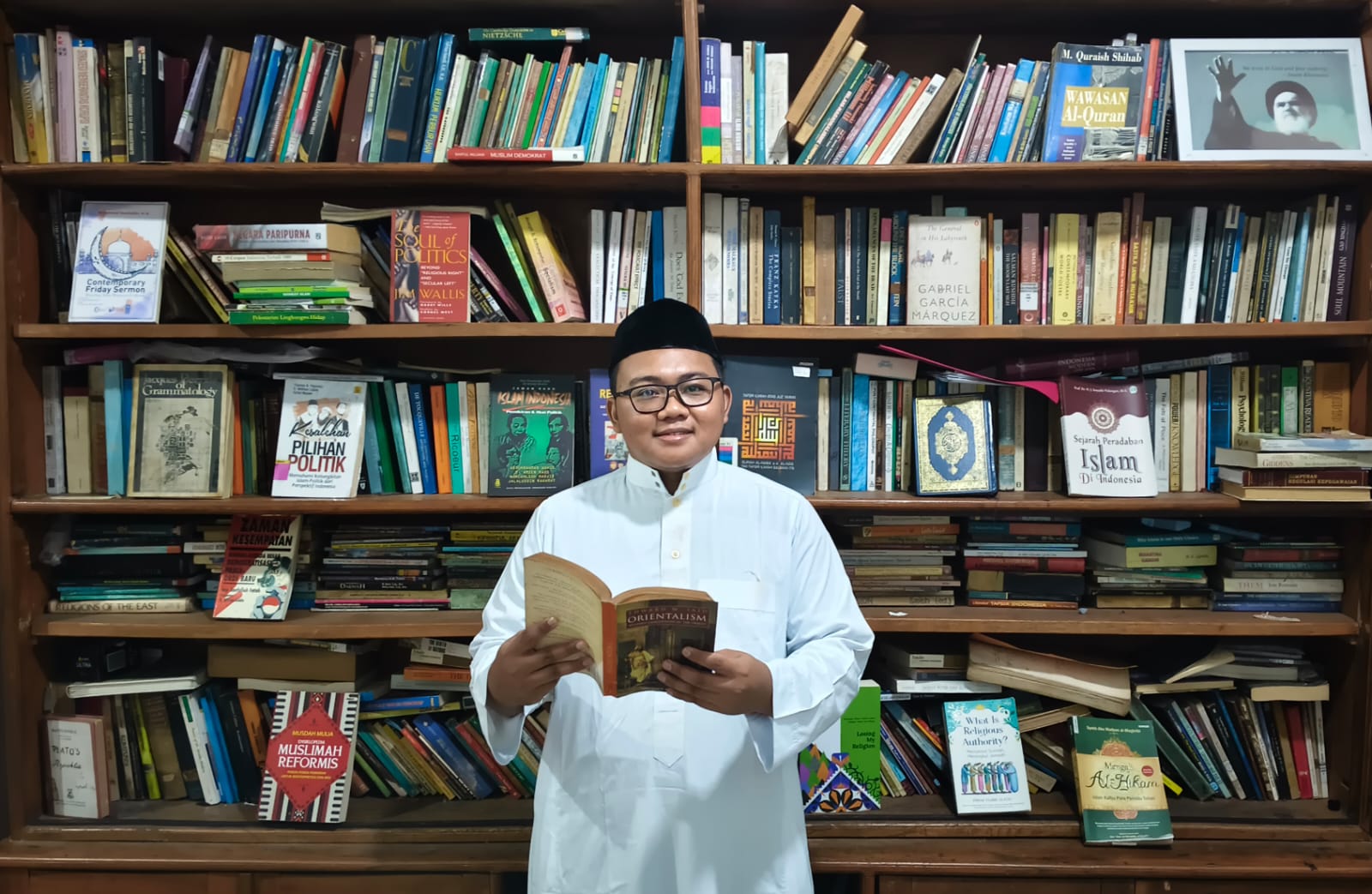
Muhammad Mutsaqqif is a young Nahdlatul Ulama intellectual and an alumnus of Wathoniyah Islamiyah Islamic Boarding School in Banyumas, Indonesia. His research and writing focus on Indonesian Islam, civil society, democracy, and religious organizations.
By Muhammad Mutsaqqif
(Young Nahdlatul Ulama Intellectual and Alumnus of Wathoniyah Islamiyah Islamic Boarding School, Banyumas, Indonesia)
As Nahdlatul Ulama (NU), Indonesia’s largest Muslim organization, prepares for its 35th National Congress (Muktamar), an increasingly important question is emerging among Islamic scholars, pesantren communities, academics, and young Nahdliyin members. The issue is not merely who will become the next chairman of the organization’s executive board (PBNU), but what kind of leadership NU needs to navigate an increasingly complex political and social landscape.
For decades, NU has occupied a unique position in Indonesia. With tens of millions of followers, it has often been described as one of the world’s largest Islamic civil society organizations. Beyond its religious role, NU has also been recognized internationally as an advocate of moderation, democracy, pluralism, and interfaith dialogue.
Yet maintaining such a reputation requires more than international recognition or sophisticated public narratives. It demands that these values remain deeply rooted among its members and consistently reflected in the organization’s institutional behavior.
That expectation explains why the emergence of Hery Haryanto Azumi, widely known as Gus Hery, has attracted growing attention in discussions surrounding NU’s future leadership.
His candidacy is not primarily driven by political alliances or institutional backing. Rather, it reflects a broader search for a leader capable of reconnecting NU with the ethical principles that have historically distinguished the organization from many other political and religious actors in Indonesia.
More importantly, his profile appears increasingly relevant when viewed alongside a series of academic critiques that have examined NU’s trajectory over the past decade.
The Growing Gap Between Narrative and Reality
One of the most influential academic discussions concerning NU’s contemporary direction emerged in 2020 with the publication of “The Myth of Pluralism: Nahdlatul Ulama and the Politics of Religious Tolerance in Indonesia” in Contemporary Southeast Asia.
Written by political scientists Marcus Mietzner of the Australian National University and Burhanuddin Muhtadi of Syarif Hidayatullah State Islamic University Jakarta, the article challenged one of the most widely accepted assumptions about NU.
Their argument was not that NU had abandoned pluralism. Rather, they questioned whether the organization’s celebrated discourse on religious moderation had genuinely transformed attitudes among its grassroots supporters.
Using national survey data, the researchers identified a noticeable gap between the pluralistic narratives promoted by NU’s national leadership and public attitudes among ordinary Nahdliyin.
On several indicators—including acceptance of non-Muslim political leaders and attitudes toward religious minorities—NU respondents did not consistently demonstrate higher levels of tolerance than other Muslim groups in Indonesia. In certain cases, resistance was even slightly stronger.
The implication was significant.
According to Mietzner and Muhtadi, concepts such as Islam Nusantara and religious moderation were not solely ideological commitments. They also functioned as political narratives that helped NU strengthen its relationship with the Indonesian state while responding to competition from other Islamic movements.
Whether one fully agrees with this conclusion or not, the research posed an uncomfortable but necessary question.
Can an organization maintain its international image as a champion of pluralism if those values are insufficiently institutionalized within its own social base?
The importance of this critique lies not only in its findings but also in its authorship.
Burhanuddin Muhtadi is hardly an outsider criticizing NU from a distance. Raised in a Nahdliyin family in Rembang, Central Java, he has long maintained close intellectual and cultural ties with NU traditions while establishing himself as one of Indonesia’s leading political scientists.
Consequently, the article was widely interpreted not as an attack on NU but as an invitation for honest institutional self-reflection.
For many observers, the challenge facing NU today is therefore less about defending its public reputation than ensuring that its moral narrative remains credible both internally and externally.
This debate has become increasingly relevant as Indonesia’s political environment grows more polarized and religious organizations face stronger pressures to engage in practical politics.
The question confronting NU is no longer whether it should participate in national affairs—it inevitably will—but whether it can do so without compromising the moral authority that has made it one of Southeast Asia’s most respected Islamic institutions.
When Political Pragmatism Overshadows Moral Authority
While Mietzner and Muhtadi approached the issue through empirical political research, another respected scholar reached a similar concern from decades of direct observation.
Martin van Bruinessen, Professor Emeritus of Islamic Studies at Utrecht University, has spent much of his academic career studying Indonesian Islam, pesantren traditions, and Nahdlatul Ulama. His books on Islamic scholarship, pesantren networks, and Sufi traditions remain widely cited both inside and outside Indonesia.
Because of this long engagement, Van Bruinessen’s observations have often carried particular weight within NU circles.
In 2025, he publicly expressed concern following a controversy involving one of PBNU’s senior figures over a government-linked nickel mining concession in Raja Ampat, one of Indonesia’s most environmentally sensitive regions.
Rather than focusing solely on the mining issue itself, Van Bruinessen highlighted something he considered even more worrying: the increasingly defensive and confrontational public posture adopted by parts of NU’s leadership.
His criticism suggested that excessive proximity to political power risks transforming an organization known for intellectual openness into one that appears primarily concerned with protecting institutional interests.
For an organization whose legitimacy has historically rested on moral credibility rather than formal political authority, such a shift carries significant consequences.
Van Bruinessen’s remarks were not those of a hostile observer.
Instead, they reflected the disappointment of a long-time scholar who has consistently admired NU’s contribution to Indonesian democracy and moderate Islam.
His warning echoed a broader concern shared by many Indonesian intellectuals: that political pragmatism, while sometimes unavoidable, should never become the defining characteristic of NU itself.
Gus Dur’s Enduring Vision of NU
These concerns are remarkably consistent with the political philosophy of Abdurrahman Wahid, better known as Gus Dur.
Indonesia’s fourth president and one of NU’s most influential leaders, Gus Dur repeatedly argued that NU’s greatest strength lay not in electoral politics but in its moral legitimacy.
Australian scholar Greg Barton documented this vision extensively in his landmark biography, Abdurrahman Wahid: Muslim Democrat, Indonesian President.
According to Barton, Gus Dur never viewed NU simply as another mass organization competing for political influence.
Instead, he regarded it as a moral force capable of shaping Indonesia’s democratic culture through ethical leadership, intellectual openness, and social engagement.
Politics, in Gus Dur’s view, was never the ultimate objective.
Rather, political participation was acceptable only insofar as it strengthened justice, democracy, religious freedom, and human dignity.
Whenever organizational interests became indistinguishable from political calculations, NU risked losing precisely what made it unique.
This distinction remains highly relevant today.
As Indonesian democracy evolves and political competition intensifies, many observers believe NU faces a fundamental choice.
Should it continue to prioritize access to political power?
Or should it reaffirm its historical identity as an independent moral authority capable of influencing politics without becoming politically dependent?
That question has become central to the ongoing discussion surrounding NU’s future leadership.
Why Gus Hery Has Entered the Conversation
Against this backdrop, the growing attention surrounding Hery Haryanto Azumi appears less surprising.
Unlike figures whose prominence stems primarily from elite political networks, Gus Hery’s profile reflects a long process of organizational development within NU’s own ecosystem.
Born in Trenggalek, East Java, in 1977, he received his early religious education at Mamba’ul Ma’arif Islamic Boarding School in Denanyar, Jombang—one of NU’s historically influential pesantren founded by KH Bisri Sansuri, a prominent scholar and co-founder of NU.
His educational journey later expanded beyond traditional Islamic studies.
He earned a degree in Sharia, pursued postgraduate studies in International Relations at the University of Indonesia, and is currently completing doctoral research in Legal Studies at Al-Azhar Indonesia University.
This combination of pesantren scholarship and modern academic training is relatively uncommon among contemporary NU leaders.
It has equipped him with familiarity not only with classical Islamic thought but also with global political discourse, international law, and comparative governance.
Equally significant is his linguistic ability.
Fluent in Arabic, English, and French, Gus Hery represents a generation of NU intellectuals capable of engaging international audiences without losing connection to Indonesia’s traditional Islamic scholarship.
In many ways, this reflects precisely the type of leadership that Van Bruinessen has often described as essential for NU’s future: deeply rooted in local religious traditions while remaining intellectually confident in global conversations.
Leadership Built Through Cadre Development
Equally important is Gus Hery’s organizational trajectory.
Unlike leaders who emerge primarily through elite negotiations, his career reflects decades of participation within NU’s own cadre development system.
He began as chairman of PMII Ciputat (the Indonesian Islamic Student Movement) before being elected Chairman of the organization’s national executive board (PB PMII) for the 2005–2007 term. His leadership at the student level was followed by broader responsibilities within PBNU, where he served as Deputy Secretary General.
His experience also extends beyond NU itself. Gus Hery became the first PBNU figure appointed to the leadership of INTI (Indonesian Chinese Association), an organization representing one of Indonesia’s largest ethnic minority communities.
That experience is noteworthy in light of the findings presented by Mietzner and Muhtadi regarding lingering social prejudice within parts of Indonesia’s Muslim community.
Rather than speaking about tolerance only as an abstract concept, Gus Hery’s involvement in cross-community organizations suggests a practical commitment to dialogue and inclusion.
His supporters argue that such engagement demonstrates how religious leadership can strengthen social cohesion without abandoning theological identity.
In Indonesia’s increasingly diverse society, this ability may prove just as valuable as administrative competence.
A Vision Beyond Internal Politics
Leadership debates within NU inevitably involve personalities, political alliances, and organizational dynamics.
Yet the more consequential discussion concerns ideas.
Throughout recent public appearances, Gus Hery has consistently emphasized several priorities that reflect long-term institutional development rather than short-term political positioning.
Among them are improving the quality of Islamic education, strengthening healthcare services for NU communities, enhancing organizational professionalism, and preparing NU to respond to technological transformation.
He has also argued for closer collaboration among NU’s autonomous bodies—including PMII, GP Ansor, Fatayat NU, Muslimat NU, and other affiliated organizations—so that the movement functions as an integrated social force rather than fragmented institutional units.
This approach resonates with a broader understanding of NU’s historical mission.
Since its establishment in 1926, NU has not merely been a religious institution. It has also served as a vast social infrastructure connecting Islamic scholarship, education, community welfare, and civic participation.
Maintaining that role in the twenty-first century will require organizational innovation without sacrificing the ethical traditions that have shaped NU for generations.
Reclaiming NU’s Moral Authority
Taken together, the perspectives of Marcus Mietzner, Burhanuddin Muhtadi, Martin van Bruinessen, and Greg Barton converge on a remarkably similar conclusion.
Each, from different academic traditions and methodological approaches, raises concerns about the relationship between institutional legitimacy and moral credibility.
Mietzner and Muhtadi question whether NU’s public discourse has been sufficiently internalized among its grassroots supporters.
Van Bruinessen warns against excessive political pragmatism that risks weakening the organization’s intellectual and ethical standing.
Barton, interpreting Gus Dur’s legacy, reminds readers that NU’s greatest influence has always rested on its moral authority rather than political transactions.
These observations do not imply that NU is experiencing institutional decline.
Rather, they suggest that an organization of NU’s historical significance must continuously renew the values that originally earned public trust.
Leadership therefore becomes more than a matter of electoral arithmetic within the organization.
It becomes an opportunity to reaffirm NU’s identity as an independent moral force capable of contributing to Indonesia’s democracy while remaining faithful to its own intellectual and religious traditions.
Whether Gus Hery ultimately becomes PBNU chairman will be decided through NU’s internal democratic process.
He is by no means the only qualified candidate, and other contenders undoubtedly bring their own experience and vision.
Nevertheless, his educational background, organizational journey, and public emphasis on ethical leadership have positioned him as one of the figures whose profile aligns most closely with the concerns raised by many scholars of contemporary NU.
Ultimately, the real issue extends beyond any single individual.
As NU approaches its 35th Congress, the organization faces a defining moment: whether to continue navigating Indonesia’s changing political landscape primarily through pragmatic accommodation, or to renew the moral leadership that has long distinguished it—not only within Indonesia, but across the global Muslim world.
The answer to that question will shape far more than the outcome of one organizational election. It may well determine how Nahdlatul Ulama is understood by future generations—as a political institution adapting to power, or as a moral movement capable of shaping it. (*)