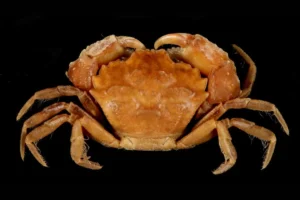
Papua’s Biodiversity Gains New Discovery as Freeport Researchers Identify Tiny Crab Species
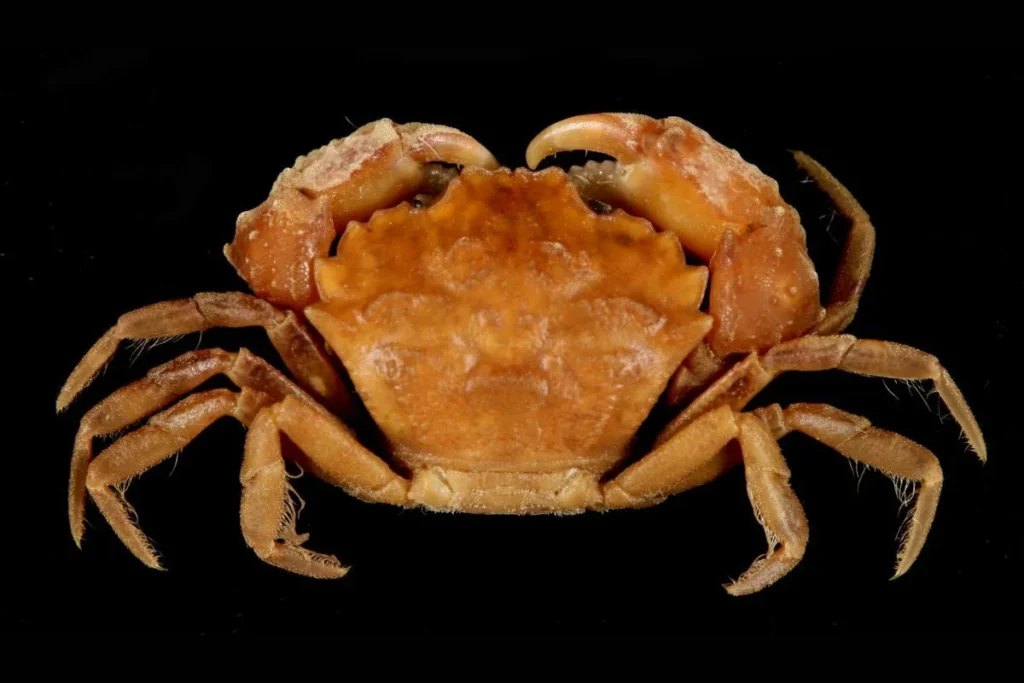
Environmental monitoring conducted by PT Freeport Indonesia (PTFI) over nearly three decades has led to the identification of a new crab species in Mimika Regency, Central Papua. Named Parapanope gesangi, the tiny crustacean adds to scientific knowledge of the region’s remarkable biodiversity. (Photo: PTFI)
BORDER JOURNAL — Environmental monitoring conducted by PT Freeport Indonesia (PTFI) over nearly three decades has led to the identification of a new crab species in Mimika Regency, Central Papua. Named Parapanope gesangi, the tiny crustacean adds to scientific knowledge of the region’s remarkable biodiversity.
The discovery emerged from PTFI’s environmental research programme, supported by the Indonesian Institute of Sciences’ (LIPI) Research Center for Oceanography. The crab, also known as the Gesang Crab, measures around 10 millimetres and is distinguished by striped patterns on its legs.
“ This discovery enriches the record of Papua’s biodiversity and demonstrates the contribution of PTFI’s environmental research,” said Gesang Setyadi, PTFI’s Vice President of Environmental Affairs.
Gesang noted that Papua has exceptionally rich biodiversity, although many areas remain insufficiently studied because of limited access. He said PTFI continues to support conservation through research, environmental monitoring and collaboration with scientific institutions.
The discovery traces back to environmental monitoring that began in 1997. In the early 2000s, the programme expanded to mangrove ecosystems, including surveys of crabs and shellfish. Researchers regularly collected biological samples, water and sediment to assess ecosystem conditions and potential impacts from operations.
In 2021, crustacean taxonomist Professor Dwi Listyo Rahayu identified characteristics that distinguished the specimen from other known species. Further examination and comparisons with scientific collections, conducted in collaboration with Professor Peter Ng in Singapore, confirmed it as a new species.
“Accurate species identification is essential to ensure biodiversity data can be used reliably in research, conservation and biological resource management,” Dwi said. She added that taxonomy provides each species with a consistent scientific identity recognised internationally.
The finding adds to previous discoveries associated with research in PTFI’s operating area. In 2020, researchers identified a new mountain shrub, Diplycosia puradyatmikai, and two crab species, Typhlocarcinops robustus and Typhlocarcinops raouli, near the Ajkwa River estuary. A 2021 collaboration involving LIPI and the South Australian Museum also confirmed Litoria lubisi, a green tree frog found in Mimika’s sago swamp forests.
PTFI has also supported research into the New Guinea Singing Dog near the Grasberg area. According to company publications, its biodiversity research has contributed to the identification of 29 new plant species, 50 insect species, 21 crab species and two fish species.
The company continues to work with research institutions and universities, including the University of Papua (UNIPA), providing access to remote research locations, field facilities and environmental monitoring data.
“Through continuous monitoring, PTFI seeks to expand scientific knowledge while supporting the conservation of Papua’s biodiversity for future generations,” Gesang said.
(***)