Indonesia Launches Journalists’ Coalition for Palestine
YPSP Chairman Dr. Ahed Ahmed Abu Al-Atta Supports Initiative to Strengthen Media Solidarity and Firsthand Reporting from Palestine.
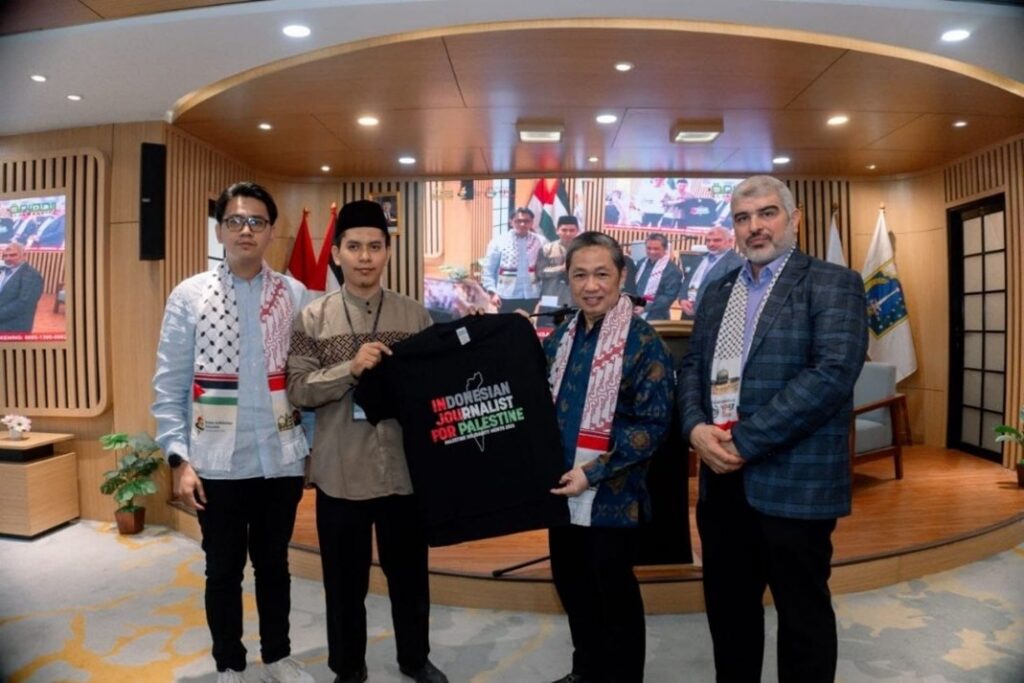
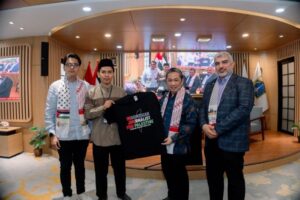
Indonesian journalists and Palestinian representatives proposed a media coalition to strengthen Gaza coverage at the Indonesian Journalists' Gathering for Palestine, Friday, Nov. 20, 2026, at H.B. Jassin Literary Hall, Jakarta.
JAKARTA, November 20, 2026 — Indonesian journalists, media professionals and Palestinian representatives have called for the establishment of the Indonesian Journalists Coalition for Palestine, an initiative aimed at strengthening direct communication between Indonesian media and journalists in Gaza, expanding access to firsthand information and keeping the humanitarian crisis in Palestine firmly on the international news agenda.
The initiative emerged during the Indonesian Journalists’ Gathering for Palestine, held on Friday, November 20, at the H.B. Jassin Literary Hall, part of the Centre for Literary Documentation (PDS H.B. Jassin), Taman Ismail Marzuki, Jakarta.
Organized by Aqsa Working Group (AWG), the gathering received significant support from the Foundation for Friendship and Civilizational Studies (Yayasan Persahabatan dan Studi Peradaban or YPSP), chaired by Palestinian academic and humanitarian figure Dr. Ahed Ahmed Abu Al-Atta.
The event formed part of the 2026 Palestinian Solidarity Month (Bulan Solidaritas Palestina 2026), a broader initiative designed to strengthen public awareness, humanitarian advocacy and international solidarity with the Palestinian people.
Under Dr. Ahed’s leadership, YPSP has played an important supporting role in bringing together institutions and communities committed to Palestinian independence and humanitarian concerns. Its involvement reflects an approach that combines institutional cooperation, public education and intercultural engagement to broaden international solidarity.
Ahead of the programme, Dr. Ahed emphasized YPSP’s commitment to the Palestinian cause through cooperation and education.
“This support is part of YPSP’s commitment to advancing the Palestinian people’s struggle for independence through stronger cooperation, education and collaboration among institutions,” he said in a statement following a preparatory meeting with AWG in October.
His position provides an important institutional foundation for the gathering, which seeks to translate solidarity into sustained professional cooperation between Indonesian and Palestinian media communities.
Building a Direct Information Network with Gaza
The proposed Indonesian Journalists Coalition for Palestine is intended to go beyond symbolic declarations of support. It aims to create a structured network through which Indonesian journalists can communicate directly with Palestinian journalists, particularly those working in the Gaza Strip.
AWG Chairman Muhammad Anshorullah said that attacks on journalists represent more than violence against individual media workers. They also threaten the public’s right to know what is happening on the ground.
He used the term journalisticide to describe the killing of journalists and what he considers efforts to silence witnesses to the conflict.
According to Anshorullah, the proposed coalition could serve as an alternative information network, allowing Indonesian journalists to obtain firsthand accounts and real-time updates from their Palestinian counterparts.
He stressed that the initiative should develop into practical cooperation, including information exchanges, direct communication, stronger source networks and wider media coverage.
The objective is to ensure that reporting on Palestine does not depend exclusively on official statements or secondhand information, but also reflects the experiences of journalists and civilians living through the crisis.
At the same time, the network is expected to maintain professional journalistic standards, including verification, source transparency and editorial independence.
A Palestinian Journalist’s Testimony from Gaza
One of the most significant contributions to the gathering came from Wael Al-Dahdouh, Al Jazeera’s veteran Gaza bureau chief, who participated virtually.
Al-Dahdouh has become widely recognized for his reporting from Gaza and the personal losses he has endured while covering the conflict. His wife and several children were killed in an Israeli airstrike in October 2023. His eldest son, Hamza, who was also a journalist, was killed in January 2024. Al-Dahdouh himself was wounded while reporting in December 2023.
Despite these tragedies, he has continued reporting from Gaza.
Speaking during the forum, Al-Dahdouh emphasized that the announcement of a ceasefire does not necessarily mean that the suffering of Palestinian civilians has ended. He warned that insecurity and humanitarian pressures continue to affect the population.
“When we see this kind of concern, we as journalists feel that we are not alone. Our stories and the suffering of people in Gaza have reached those who care, breaking through information barriers and geographical boundaries,” he said, as reported by GPriority.
His testimony highlighted the importance of international media solidarity, particularly when journalists face extraordinary risks in documenting events from conflict zones.
The scale of the losses among Palestinian media workers was also discussed. Figures from Gaza’s Government Media Office, cited in a report by MINA, put the number of journalists and media workers killed since October 2023 at at least 263 as of early October 2026. Other reports have cited figures exceeding 260, alongside hundreds of injured media workers.
These figures underscore the dangers faced by journalists in Gaza and the importance of international efforts to protect media workers and uphold their ability to report independently.
Anis Matta: Palestine and the Transformation of the Global Order
The gathering also featured Indonesian Deputy Foreign Minister M. Anis Matta as its keynote speaker.
Matta argued that the Palestinian issue has evolved beyond a regional conflict or a matter of religious solidarity. It has increasingly become a global humanitarian and political concern, influencing public opinion and political debates in Europe and the United States.
He observed that international perceptions of the Palestinian struggle have changed significantly since the escalation of the Gaza conflict in October 2023.
“The Palestinian resistance narrative today is no longer simply Islam versus Zionism, but something much broader: humanity versus anti-humanity,” Matta said, according to ANTARA.
He also linked the future of Palestine to broader changes in the international system.
“The victory of Palestine will not only result in Palestinian independence, but, more importantly, will contribute to the formation of a new world order,” he said.
His remarks placed the Palestinian question within a wider discussion about international justice, the credibility of global institutions and the future of the international political order.
Matta’s intervention also reflected Indonesia’s longstanding constitutional commitment to opposing colonialism and supporting the right of all nations to independence.
For Indonesia, support for Palestine is rooted not only in diplomatic policy but also in the historical experience of its own struggle for national liberation.
Bringing Journalists, Diplomats and Media Professionals Together
The forum brought together participants from different professional backgrounds, creating an opportunity to connect firsthand reporting from Palestine with Indonesian media experience and diplomatic perspectives.
Among the speakers were Desi Fitriani, a senior journalist with Media Group who has reported from several conflict and humanitarian crisis zones, and Faisal Assegaf, founder of Albalad.co and a former international desk editor at Koran Tempo.
Aat Surya Syafaat, Director of the Indonesian Journalists Association’s (PWI) Journalist Competency Examination programme, moderated the discussion.
Ismail Al-Thawabta, Director-General of Gaza’s Government Media Office, also delivered remarks, adding an institutional perspective on the challenges facing media and information services in Gaza.
The diversity of participants reflected the importance of cooperation between journalists, media organizations, civil society institutions and policymakers in addressing the information challenges surrounding the Palestinian crisis.
For YPSP, supporting the initiative is part of a wider commitment to building cooperation among organizations and communities concerned with humanitarian issues and Palestinian independence.
Dr. Ahed’s involvement also highlights the importance of connecting Palestinian perspectives and experiences with Indonesian institutions, academics, journalists and civil society.
From Solidarity to Sustainable Action
The organizers hope that the Indonesian Journalists Coalition for Palestine will become a sustainable professional platform rather than a temporary response to a particular event.
Its proposed activities include direct exchanges between journalists in Indonesia and Gaza, collaborative reporting, the development of reliable information networks and broader public engagement on humanitarian issues.
The initiative also carries a broader message: journalism is not merely about delivering information. In situations where access to information is restricted and journalists face serious risks, independent reporting becomes essential to documenting human suffering, preserving public memory and supporting accountability.
However, solidarity must go hand in hand with professional responsibility. Firsthand information requires careful verification, multiple-source confirmation where possible and respect for journalistic ethics. The credibility of the coalition will ultimately depend on its ability to maintain these standards while ensuring that Palestinian voices are not marginalized.
The gathering is part of AWG’s wider 2026 Palestinian Solidarity Month programme, which includes public campaigns, educational activities, humanitarian engagement and international discussions.
The programme is also scheduled to continue with an International Anti-Zionist Symposium on November 26, 2026, at the Indonesian House of Representatives and Regional Representative Council complex in Jakarta.
For AWG and YPSP, the broader objective is to encourage more sustained participation from Indonesian society in humanitarian advocacy and international solidarity efforts.
The Indonesian Journalists Coalition for Palestine could become an important contribution to that effort by connecting media professionals across borders and strengthening the flow of information from Gaza to the wider world.
Ultimately, the initiative is about ensuring that the stories of Palestinian civilians, the experiences of journalists working under extraordinary conditions and the demand for human dignity remain visible.
When journalists are silenced, the world risks losing its witnesses. When information is allowed to flow freely, the voices of those most affected by conflict have a better chance of being heard.
Through this initiative, Indonesian journalists and their Palestinian counterparts are seeking to make sure that the humanitarian realities of Gaza remain part of the world’s conscience and public conversation.
(Sam)