Carbon Accounting Goes Digital as Indonesia Links Startup C3ARBON with Batang Industrial Estate
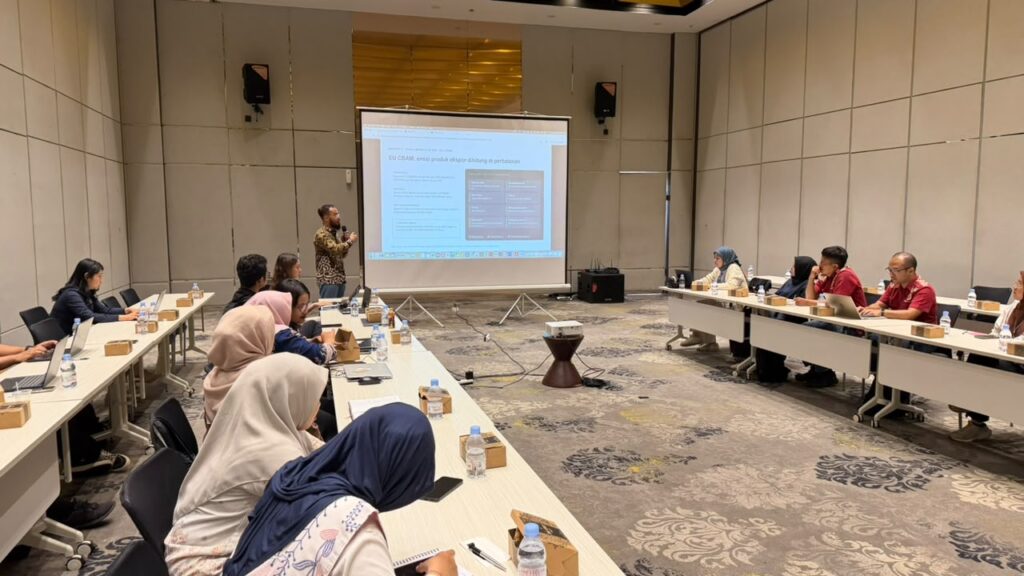
The Ministry of Creative Economy has partnered with PT Carbon Energy & Technology, known as C3ARBON, to introduce carbon accounting and emissions verification practices to companies operating in the industrial estate. The initiative, held on November 24, 2026, aims to connect domestic technology innovation with the practical needs of businesses pursuing more sustainable operations.
BORDER JOURNAL — Indonesia is stepping up efforts to prepare its industrial sector for growing global demands on carbon transparency, bringing a homegrown technology startup into an initiative to strengthen emissions accounting at the Industropolis Batang Special Economic Zone in Central Java.
The Ministry of Creative Economy has partnered with PT Carbon Energy & Technology, known as C3ARBON, to introduce carbon accounting and emissions verification practices to companies operating in the industrial estate. The initiative, held on November 24, 2026, aims to connect domestic technology innovation with the practical needs of businesses pursuing more sustainable operations.
The programme, titled “Carbon Accounting Literacy and Emissions Verification for Industrial Estates,” covered greenhouse gas measurement, data recording and emissions reporting.
Dandy Yudha Feryawan, Director of Technology Creativity at the ministry, said industrial transformation requires more than investment and infrastructure. Companies must also be prepared to adopt technologies that support sustainability.
Through the partnership, he said, the ministry wants to demonstrate how solutions developed by Indonesian startups can help businesses manage emissions in a more systematic and measurable way.
Angga Brahmana Sukma, Marketing and Development Director of PT Kawasan Industri Terpadu Batang, the company managing the industrial estate, said environmental management was becoming an essential part of industrial development.
He noted that carbon accounting literacy could help companies understand their emissions and prepare for more structured environmental management. The collaboration also gives industrial tenants access to knowledge and technology options that could support their sustainability efforts.
Carbon Data as a Business Priority
Hilman Ali Hazmi, CEO of C3ARBON, said carbon accounting was no longer simply an environmental reporting requirement. It was increasingly becoming a business consideration that could influence competitiveness, particularly as international markets, investors and business partners paid closer attention to sustainability performance.
C3ARBON has developed C3ARBON ONE, a digital carbon management platform designed to help companies compile emissions inventories, manage emission factors, record supporting evidence and prepare emissions reports.
The platform supports emissions calculations based on the Greenhouse Gas Protocol and ISO 14064-1 standards.
Hilman stressed that reliable carbon reporting starts with complete and consistent activity data backed by supporting documentation. Companies need to identify their emissions sources and establish systematic records before preparing calculations and reports in line with relevant standards and regulations.
The programme also introduced participants to national and international carbon regulations, emissions measurement standards, and calculations covering Scope 1, Scope 2 and Scope 3 emissions. These categories cover direct emissions, indirect emissions from purchased energy, and other indirect emissions across a company’s value chain.
Participants also received a demonstration of C3ARBON ONE, illustrating how digital tools can support corporate emissions data management.
Global Trade Raises the Stakes
The initiative comes as carbon transparency gains importance across international supply chains. Investors, business partners and regulators are increasingly seeking clearer information about the environmental impact of production.
One policy adding to the pressure is the European Union’s Carbon Border Adjustment Mechanism (CBAM), which introduces carbon-related requirements for certain imported goods. Such developments are making emissions measurement and reporting increasingly relevant to companies seeking access to international markets.
Rizali Nurcahya Nararya, acting head of business licensing and other licensing affairs at the Secretariat of the National Council for Special Economic Zones, said stronger carbon accounting literacy was consistent with the country’s broader ambition to develop greener special economic zones.
He expressed hope that Industropolis Batang could become a pioneer in developing and applying the concept of a Green Special Economic Zone, potentially serving as a model for other industrial areas in Indonesia.
The Ministry of Creative Economy said it hoped the partnership would lead beyond awareness-raising activities. Cooperation between government agencies, industrial estate managers, businesses and technology startups could help identify operational needs, test digital solutions and eventually expand their adoption across industrial facilities.
For Indonesian technology startups, the initiative also offers an opportunity to demonstrate that locally developed solutions can address challenges facing businesses in an increasingly sustainability-conscious global economy.
(***)