Hery Haryanto Azumi Calls for Muslim Scholars to Rise, Preachers to Unite, and Santri to Lead Indonesia’s Future
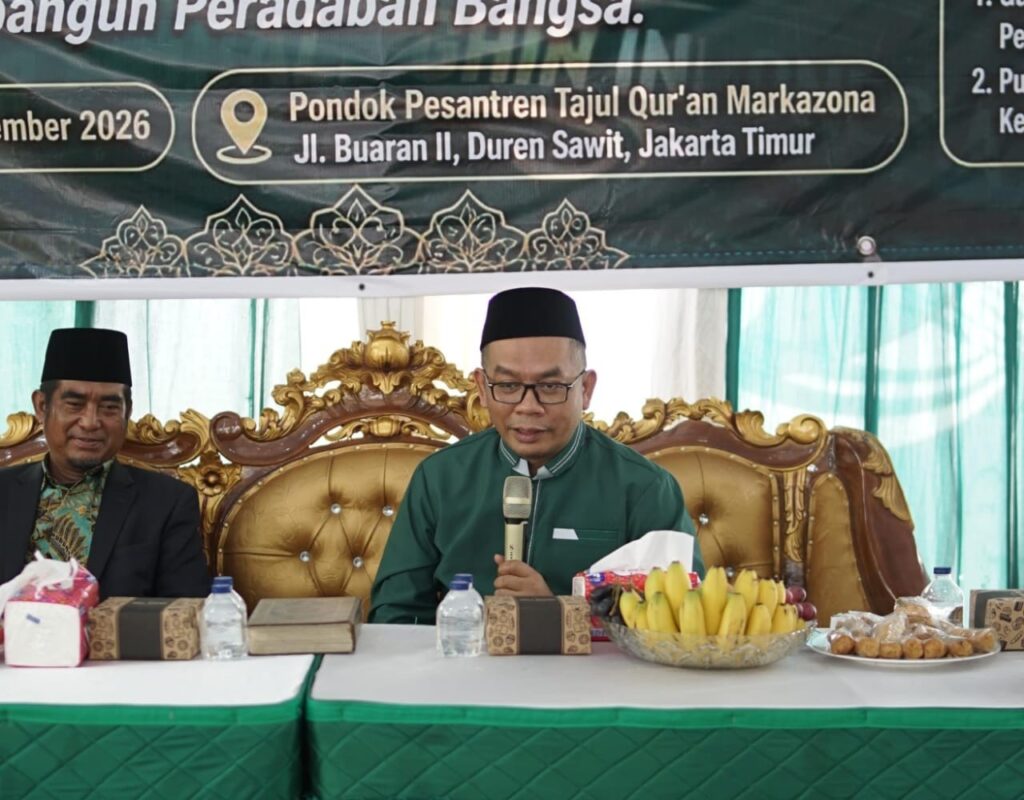
Hery Haryanto Azumi, initiator of Poros Global Indonesia, has called for a renewed role for Muslim scholars, greater unity among Islamic preachers, and stronger leadership by santri—students of Islamic boarding schools—as Indonesia looks toward its future.
BORDER JOURNAL – JAKARTA, November 28, 2026 — Hery Haryanto Azumi, initiator of Poros Global Indonesia, has called for a renewed role for Muslim scholars, greater unity among Islamic preachers, and stronger leadership by santri—students of Islamic boarding schools—as Indonesia looks toward its future.
He argued that amid political tensions and mounting national challenges, Muslims should not merely serve as supporters in the country’s political arena, but emerge as an intellectual, moral, and social force capable of offering solutions and shaping Indonesia’s direction.
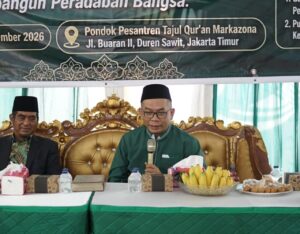
The call was made during the National Symposium of Indonesian Muballighin (Islamic Preachers), held as part of the Pre-Muktamar Muballighin Indonesia series at Pondok Pesantren Tajul Quran in Jakarta on November 27–28, 2026. The symposium also featured Puang H. Andi Rukman Nurdin Karumpa, Chairman of GAPENSI, and KH. Rusli Ahmad, Deputy Chairman of the Forum Keberagaman Nusantara.
In his remarks, Azumi, widely known as Gus Hery, emphasized that Muslim scholars have a vital responsibility to guide society toward the ideal of Khaira Ummah, or the best community. Their role, he said, should extend beyond religious instruction to providing moral guidance, intellectual clarity, and a sense of calm amid social divisions and competing political interests.
He said society increasingly needs religious leaders who can foster dialogue, encourage wisdom, and prevent differences from turning into divisions. In times of uncertainty, scholars should serve as sources of inspiration and guidance, helping people navigate complex social and national issues with a constructive outlook.
Azumi also highlighted the principle of Hubbul Wathan Minal Iman—love of one’s homeland as part of one’s faith—as an important spirit in safeguarding national unity. Indonesia, he noted, was founded on a shared national commitment that brings together people of different ethnicities, religions, cultures, and backgrounds.
For that reason, he argued, Muslim scholars and preachers have a strategic role in upholding Pancasila, the Unitary State of the Republic of Indonesia, and the country’s diversity as fundamental pillars of national life.
Religious commitment and nationalism, he said, should not be viewed as competing values. Rather, they can reinforce one another in building a society grounded in civility, justice, solidarity, and mutual respect.
Looking ahead, Azumi called on Muslims to embrace the spirit of Nahdah and Ba’ats—renewal and awakening—as a vision for Islamic resurgence in the 21st century. He said Islam in Indonesia should contribute to intellectual, social, economic, and political renewal, enabling the community to address its own challenges while contributing to the wider national agenda.
In this context, he urged Muslims to become a decisive factor in Indonesia’s development, rather than merely a supporting force in political affairs. Their contribution, he said, should be measured through ideas, competence, leadership, achievements, and the ability to provide practical solutions to the problems facing society.
Azumi also pointed to the growing presence of santri across a wide range of professions and fields, including academia, business, public administration, research, and other areas of expertise, both at home and internationally.
He believes the traditions of Islamic boarding schools offer valuable foundations for leadership. Simplicity, discipline, perseverance, resilience, and a habit of seeking solutions to difficult problems, he said, are among the qualities that can equip santri to take on broader responsibilities in public life.
In his view, santri are not merely custodians of religious traditions. They are also an emerging intellectual and social force with a historical responsibility to contribute to Indonesia’s future.
Azumi even suggested that members of the santri community could once again play a significant role in national leadership in 2029. Their expanding expertise, experience, and professional networks, he argued, create opportunities for a new generation of leaders rooted in pesantren values while equipped to respond to the demands of a changing world.
He also challenged stereotypes about santri that persist in some Orientalist narratives, stressing that pesantren should be recognized not simply as religious institutions, but as centers for intellectual development, character formation, and future leadership.
Concluding his remarks, Azumi said the revival of Muslim scholars, unity among Islamic preachers, and the leadership of santri must go hand in hand. Together, these three forces could help strengthen the role of Muslims in national life and contribute to Indonesia’s broader transformation.
“Scholars must rise, preachers must unite, and santri must have the courage to lead. We cannot simply remain spectators in the course of our nation’s history. Muslims must be present as a force that provides vision, offers solutions, and helps shape Indonesia’s future,” he said.
He expressed hope that the National Symposium of Indonesian Muballighin would serve as a catalyst for stronger intellectual, organizational, and movement-based consolidation among Islamic preachers. More importantly, he said, the forum should encourage scholars, preachers, and santri to make a tangible contribution to Indonesia’s development and to the wider effort of building a renewed civilization amid global change.
(***)