Kartini’s Legacy Lives On as Six Women Scientists Lead Indonesia’s Energy Transition
As Indonesia accelerates its transition toward sustainable energy, the role of women is no longer supplementary—it is central. These six scientists demonstrate that Kartini’s legacy is not only preserved but continuously evolving in the face of global challenges.
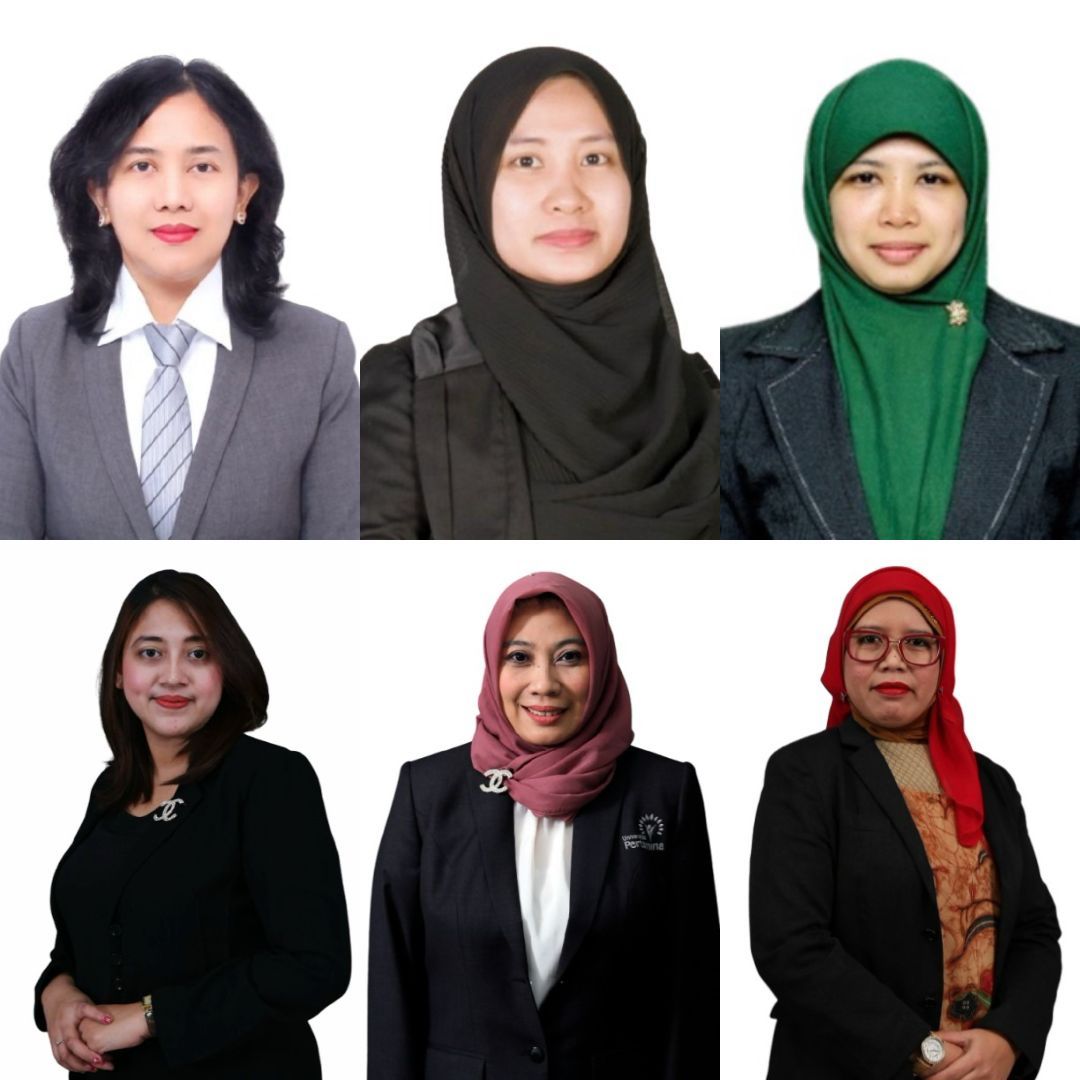
Top row (left to right): Dr. Dumex Sutra Pasaribu, Dr. Nonni Soraya Sambudi, and Dr. Nila T. Berghuis, S.Si., M.Si. Bottom row (left to right): Assoc. Prof. Dr. Eng. Ir. Mega Mutiara Sari, S.T., M.Si., CSDS., CSRS., Dr. Ir. Farah Mulyasari, S.T., M.Sc., and Eka Puspitawati, Ph.D. (Photo: UPER Documentation)
JAKARTA — The spirit of Kartini Day, commemorated every April 21, continues to resonate far beyond ceremonial celebrations. Once a symbol of women’s struggle for education, Kartini’s legacy is now reflected in a new generation of Indonesian women tackling one of the world’s most urgent challenges: climate change and energy independence.
At the forefront of this movement are six female researchers from Universitas Pertamina (UPER), whose cross-disciplinary work is shaping Indonesia’s energy transition—from upstream exploration to downstream innovation and policy.
Their contributions mirror global trends. A 2025 report by the International Renewable Energy Agency highlights that women now make up 32 percent of the renewable energy workforce worldwide, with 19 percent holding leadership positions. These figures underscore the growing importance of women’s leadership in achieving Indonesia’s Net Zero Emission (NZE) target by 2060.
From Subsurface Stability to Carbon Storage
Dr. Dumex Sutra Pasaribu, a geologist specializing in structural modeling, plays a critical role in ensuring the safety of energy transition technologies. Using advanced methods such as Analogue Sandbox Modelling and Palinspastic Restoration, her work focuses on understanding subsurface conditions essential for carbon capture and storage (CCS/CCUS) and geothermal energy development.
“Energy transition requires a deeper understanding of Earth’s stability. Our research ensures that underground carbon storage technologies remain safe and reliable,” she explained.
Advancing Green Materials and Clean Energy
Recognized among the world’s top scientists in the Top 2 Percent Scientists Worldwide 2025 list by Stanford University, Dr. Nonni Soraya Sambudi is pushing the boundaries of chemical engineering. Her research in nanomaterials and photocatalysis aims to accelerate emission reduction and clean energy production in downstream sectors.
“Many environmental issues arise at the final stage of production. That’s why we focus on circular systems where waste is transformed into valuable resources,” she said.
Closing the Loop with Battery Regeneration
Bridging innovation and environmental protection, Dr. Nila T. Berghuis focuses on regenerating used lithium-ion batteries. Her research supports the development of a circular economy in Indonesia’s growing electric vehicle industry.
“Green energy must not leave behind environmental burdens. Used batteries should become new resource hubs for future industries,” she emphasized.
Turning Waste into Energy
Assoc. Prof. Dr. Eng. Mega Mutiara Sari approaches energy transition from a sustainability and environmental engineering perspective. Her research focuses on waste-to-energy solutions and sustainable industrial environmental management.
“Energy transition is not just about switching sources—it’s about breaking the pollution cycle entirely. Waste can be transformed into clean energy while delivering social and environmental benefits,” she said.
Humanizing Energy Transition
Dr. Farah Mulyasari ensures that technological advancements are understood and embraced by society. Through communication strategies and public education, she bridges the gap between science and everyday life.
“Without public literacy and acceptance, even the most advanced technologies will fail to make an impact. Energy transition must become a collective movement,” she noted.
Balancing Economics and Sustainability
From an economic standpoint, Eka Puspitawati, Ph.D., examines how energy policies affect trade, markets, and national stability. Her research includes biodiesel downstreaming and the global nickel market, a key component in battery production.
“Clean energy transition must be economically inclusive. It should not burden society or compete with essential sectors like food. Our goal is to ensure energy sovereignty while maintaining economic stability,” she explained.
A New Generation of Kartinis
Acting Rector of Universitas Pertamina, Djoko Triyono, подчеркed that these six women represent the university’s core values of inclusivity and interdisciplinary collaboration.
“They are modern Kartinis. Beyond teaching, they are actively designing Indonesia’s energy future—from upstream processes to downstream economic policies,” he said.
As Indonesia accelerates its transition toward sustainable energy, the role of women is no longer supplementary—it is central. These six scientists demonstrate that Kartini’s legacy is not only preserved but continuously evolving in the face of global challenges. (*)