Indonesia’s Role in Easing China–Japan Tensions
The question, however, is not only whether Indonesia can help—but whether China and Japan are willing to allow external facilitation.
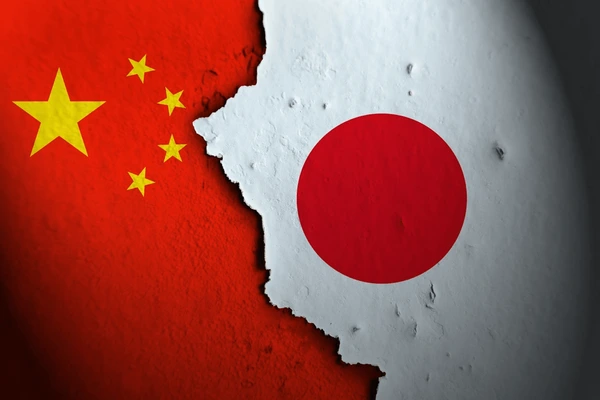
Indonesia’s Role in Easing China–Japan Tensions. (Photo: Shutterstock)
By Samsul Muarif (Commentator on Indonesia–Japan–China Relations)
The latest spike in tensions between China and Japan — triggered by Prime Minister Sanae’s pointed remarks on Taiwan — has exposed yet again the fragility of Northeast Asia’s strategic landscape. For observers in Tokyo this December, the mood is noticeably tenser: security analysts speak more cautiously, diplomats choose their words more carefully, and policymakers prepare for yet another cycle of friction between Asia’s second- and third-largest powers.
At the heart of the dispute lies a deeper structural rivalry, shaped by history, nationalism, and the shifting balance of power. The Lowy Institute’s Asia Power Index 2025, which still places the United States at the top, followed by China, India, and Japan, illustrates how power remains concentrated among a few major states. Indonesia, ranked ninth, is not a military heavyweight—but is increasingly recognized as a diplomatic one.
A Rivalry Rooted in Identity and Power
Political scientist Samuel P. Huntington long argued that cultural and civilizational identities influence modern conflicts. In the China–Japan context, unresolved historical memory amplifies even minor policy disagreements. Taiwanese geopolitics, as Sanae’s remarks demonstrated, remains a live wire in this delicate equation.
Prof. Dewi Fortuna Anwar, a leading Indonesian strategist, frequently emphasizes that Asia’s peace depends on “how major powers manage both rivalry and reassurance simultaneously.”
Current developments show how thin that balance has become.
Indonesia has a unique opening. Indonesia’s strength does not lie in military capacity but in credibility, forged through decades of maintaining balanced ties with all major powers.
IR theorist Hedley Bull described “middle powers” as states capable of influencing outcomes through mediation, norm-setting, and coalition building. Indonesia fits this definition precisely. Its leadership in ASEAN, its history of facilitating quiet diplomacy on the South China Sea, and its reputation as a neutral voice make it one of the few actors both Beijing and Tokyo will answer calls from.
President Prabowo Subianto now has an opportunity to leverage that position.
Prabowo’s Emerging Foreign-Policy Footprint
Prabowo’s international credentials rose sharply after his government helped facilitate humanitarian negotiations linked to the Israel–Palestine conflict. A similar effort in East Asia — albeit in a different format — would elevate Indonesia’s standing even further.
Several Japanese officials expressed confidence in Indonesia’s ability to “calm waters without taking sides.” And, Chinese academics echoed that sentiment, describing Indonesia as “trustworthy, non-threatening, and genuinely neutral.” This dual trust places Indonesia in a rare category.
Hence, the benefits for Indonesia are not symbolic alone. The argument for Indonesian involvement is not charity. It is strategic self-interest. If Indonesia helps defuse China–Japan tensions, it stands to gain:
- Strengthening Japanese investment. Japan remains one of Indonesia’s top three investors, funding everything from infrastructure to advanced manufacturing. Demonstrating diplomatic maturity would reinforce investor confidence and potentially deepen industrial collaboration.
- Maintaining robust trade with China. China is Indonesia’s largest trading partner. Stability in Beijing–Tokyo ties reduces the risk of regional economic shocks that could reverberate through Indonesian supply chains.
- Cementing Indonesia’s middle-power status. Effective mediation—even informal—would affirm Indonesia’s growing role in regional governance and enhance its bargaining position in multilateral forums.
- Alignment with Prabowo’s vision. President Prabowo seeks a more engaged, assertive foreign policy. A constructive Indonesian contribution to the China–Japan rift would showcase leadership without antagonism.
However, Jakarta must carefully navigate the risks. Indonesia must avoid appearing to intervene prematurely or take sides. Any misstep could strain ties with one of the two economic giants, draw Indonesia into complex security dilemmas, or diminish ASEAN unity.
As IR scholar Robert Keohane cautions, middle powers must engage “with prudence, consistency, and a clear sense of limits.” Indonesia’s strength is not in imposing solutions, but in creating space for dialogue.
What Comes Next
If the standoff intensifies, Jakarta may activate several diplomatic channels: track 1.5 dialogues involving scholars, former officials, and think tanks, ASEAN–plus formats, offering neutral ground for discussion, and quiet trilateral engagements, made possible by Indonesia’s balanced relationships.
Indonesia’s long-standing principle of politik luar negeri bebas aktif (free and active foreign policy) provides the doctrinal backbone for such initiatives.
The question, however, is not only whether Indonesia can help—but whether China and Japan are willing to allow external facilitation.
As one Japanese diplomat said in Tokyo: “Indonesia is one of the few countries we trust to carry a message without twisting it.” And as a Chinese academic noted in Beijing:
“Jakarta’s voice is calm, and sometimes that is exactly what the region needs.”
As the region’s geopolitical climate becomes increasingly unpredictable, Japan should view Indonesia not as a distant observer, but as a valuable interlocutor. Indonesia’s message is consistent and constructive: stability is in everyone’s interest, and dialogue is the only path forward.
In a geopolitical environment increasingly shaped by sharp rhetoric and rapid military signaling, that calm voice may soon be in high demand.
Tokyo would lose nothing—and could gain much—by welcoming Indonesia’s quiet assistance. []