Faith and Financial Preparation: 6 Family Protection Principles for Muslim Sandwich Generation
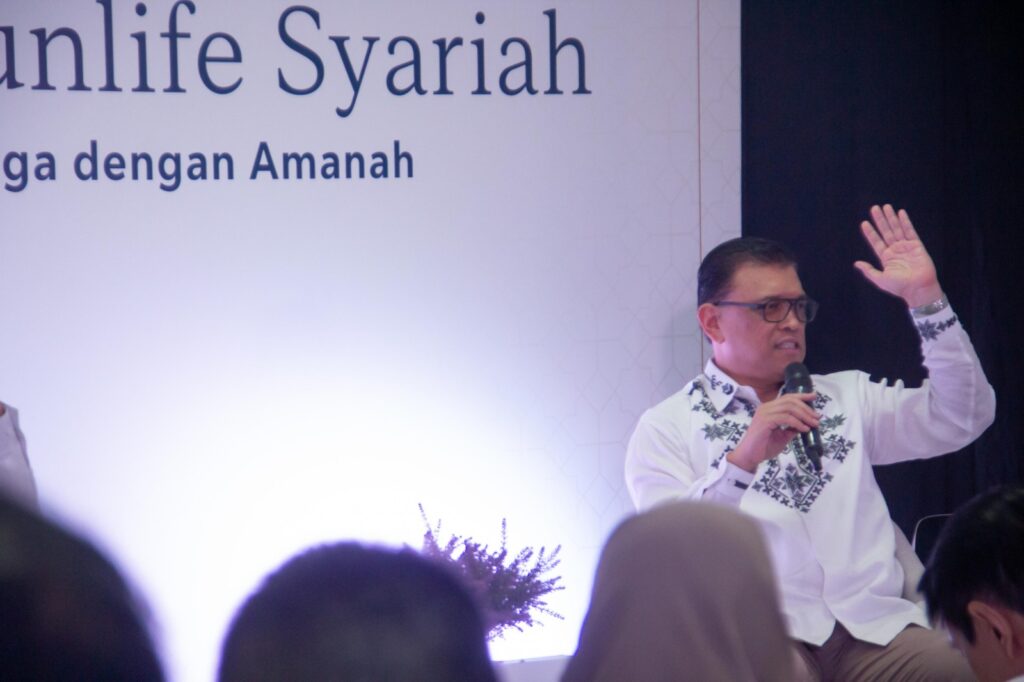
Agung Prambudi, President Director of Sun Life Syariah.
BORDER JOURNAL — Supporting aging parents while raising children can place considerable financial pressure on Muslim families. For the sandwich generation, meeting the needs of two generations often means managing household expenses while preparing for unexpected events, such as prolonged illness or a sudden loss of income.
The phrase “Just leave it to Allah” may bring comfort during difficult times. However, in Islam, tawakal — placing one’s trust in Allah — goes hand in hand with ikhtiar, or making a sincere effort.
For Muslim families, ikhtiar can include saving regularly, building an emergency fund, and considering financial protection. These preparations become particularly important when one income supports several family members.
Agung Prambudi, President Director of Sun Life Syariah, highlights the importance of understanding Sharia principles when planning family protection. These include ta’awun, or mutual assistance, and the concept of shared risk.
Sun Life Syariah aims to help Indonesian families understand and prepare for protection based on these principles. Before choosing any financial product, however, people should first understand how the underlying concepts and arrangements work.
Here are six important points Muslim members of the sandwich generation should consider when planning family protection.
1. Tawakal Does Not Mean Leaving Everything Unprepared
Ikhtiar refers to the effort people make, while tawakal means entrusting the outcome to Allah after making that effort. The two principles are not contradictory.
Saving money, establishing an emergency fund, and preparing a financial plan for the family are practical forms of ikhtiar. These steps can help households become better prepared when unexpected circumstances arise.
2. Assess How Long Your Family Can Manage Without Income
The sandwich generation needs to understand how long their household could meet its essential needs if its main source of income suddenly stopped.
According to the Sun Life Financial Resilience Index 2026, only 45 percent of respondents in Indonesia felt they could support themselves for more than six months without income.
The finding highlights the financial resilience challenges many households face. Families should calculate their monthly expenses, including the needs of children and aging parents, to determine how much emergency savings they may need.
3. Understand Ta’awun as a Principle of Mutual Support
One of the important principles in Sharia insurance is ta’awun, which means helping one another.
Through a risk-sharing mechanism, participants contribute to a system designed to help other participants who experience misfortune, subject to the applicable terms and conditions.
Understanding this principle allows people to see Sharia-based protection not only as a way to safeguard their own interests, but also as part of a broader spirit of mutual assistance.
4. Understand Contributions and the Tabarru’ Fund
In Sharia insurance, participant contributions are allocated according to the terms of the product. One component is the tabarru’ fund, which is intended to help fellow participants when they face covered risks.
Before joining a plan, prospective participants should ask their financial advisor how contributions are allocated, how the funds are managed, and how the claims process works.
If a product includes the possibility of an underwriting surplus, participants should also understand the relevant conditions and distribution mechanism. Any surplus is subject to the policy terms and should not be regarded as a guaranteed benefit.
5. Do Not Confuse Savings, Investments, and Sharia Insurance
These three financial instruments serve different purposes. Savings can cover short-term needs and provide emergency reserves. Investments aim to grow assets over the long term, while Sharia insurance helps people prepare for risks that are difficult to predict.
Because their functions differ, these instruments can complement one another rather than replace one another. Before selecting a protection plan, prospective participants should carefully review its benefits, conditions, and exclusions.
6. Make Protection Part of a Broader Family Financial Plan
Having insurance does not automatically resolve every financial challenge a family may face. Protection should be considered alongside emergency savings, retirement planning, and estate planning.
Sun Life reported that 64 percent of the sandwich generation in Indonesia had life insurance or takaful coverage. Meanwhile, 76 percent had health insurance or takaful coverage.
However, 31 percent of sandwich-generation respondents had also temporarily stopped or reduced their retirement contributions because of caregiving responsibilities.
This highlights the importance of balancing immediate family needs with long-term financial preparation.
Start with a Family Conversation, Not a Product
Planning family protection can begin with a simple conversation at home. Family members should identify who depends on the household’s main income, what preparations are already in place, and which financial needs remain unmet.
Once they understand their circumstances, families can consult a financial advisor to explore Sharia-based protection options that match their needs and financial capacity.
Those seeking further information about Sharia-based protection can visit Sun Life Indonesia’s official website at https://www.sunlife.co.id/id/syariah/ to learn more and arrange a discussion with an advisor.
(Source: Sun Life Syariah)