Earth Day Wake-Up Call Expert Warns Methane from Jakarta Landfills Is a Climate Time Bomb
This Earth Day may have passed, but its message lingers: without immediate and inclusive action, Indonesia’s waste crisis could escalate into a far greater climate disaster.
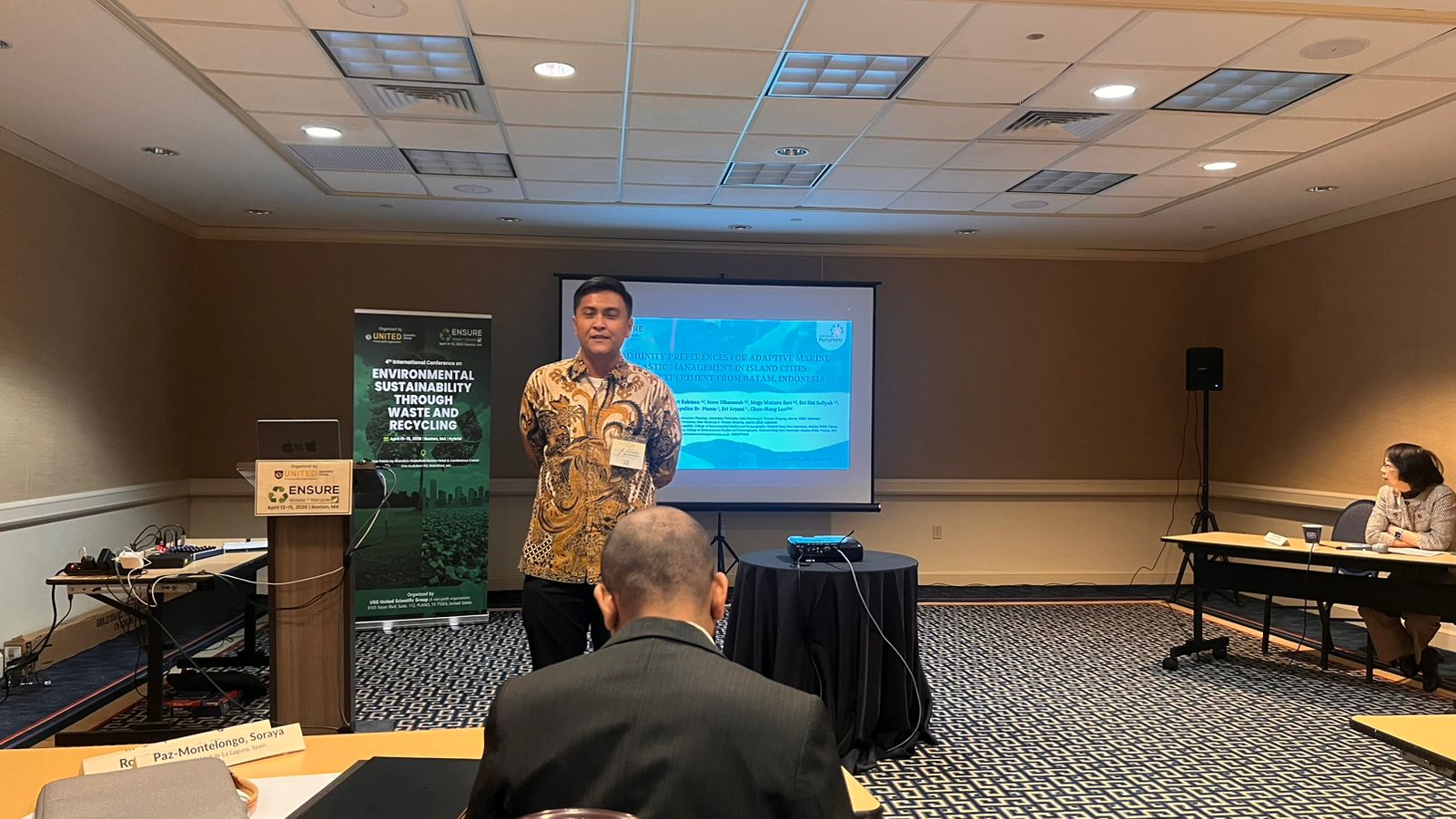
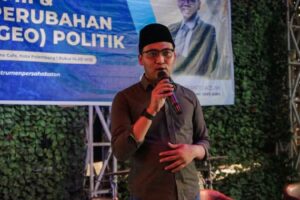
Environmental Engineering expert from Universitas Pertamina (UPER), Ir. I Wayan Koko Suryawan, Ph.D., delivers a scientific paper presentation at the 4th International Conference on Environmental Sustainability Through Waste and Recycling (ENSURE), held on April 13–15, 2026, in Boston, Massachusetts, United States. (Photo: UPER Documentation)
JAKARTA — This year’s Earth Day has become more than a symbolic reminder for Indonesia. It has turned into a moment of reckoning. A recent 2025 report from the UCLA STOP Methane Project revealed a striking finding: a landfill site in Jakarta has been detected by satellite as the world’s second-largest methane emitter in the global waste sector.
Methane, a greenhouse gas released from decomposing organic waste, is up to 80 times more potent than carbon dioxide in trapping heat over a 20-year period. According to I Wayan Koko Suryawan, an environmental engineering expert from Universitas Pertamina (UPER), the data should serve as a serious warning.
“Satellite data doesn’t lie. If Jakarta ranks second globally, it means we are dealing with a ticking climate bomb. A single dense landfill emission point can contribute as much to global warming as one million SUVs operating for a year,” he said in a press statement on Saturday (May 2, 2026).
Open Dumping Still Dominates
The urgency is further underscored by data from Indonesia’s Ministry of Environment, which reported that of the country’s 56.63 million tons of annual waste, around 21.85 percent is still managed through open dumping. This outdated practice significantly accelerates methane emissions, making them detectable even by international satellite monitoring systems.
Jakarta’s Bantargebang Landfill, one of the largest waste disposal sites in Southeast Asia, has long been under scrutiny for its environmental impact.
Research Points to Behavioral Gap
In his latest study titled “Achieving Zero Waste for Landfills by Employing Adaptive Municipal Solid Waste Management Services,” published in the high-impact journal Elsevier’s Ecological Indicators, Dr. Koko offers practical, adaptive solutions to reduce methane emissions directly at the source.
The research, which surveyed 651 Jakarta residents across both low-income and higher-income neighborhoods, reveals a crucial insight: awareness is not the problem—implementation is.
“People already understand the importance of waste sorting, but they often don’t act because the system doesn’t support them. Public campaigns alone are not enough. We need practical tools—mobile reminders, stronger waste bank systems, and community leaders who can set examples at the neighborhood level,” he explained.
One City, Different Needs
The study also highlights the diverse needs of Jakarta’s population. In affluent areas, smart city technologies such as digital waste tracking and sensor-based collection systems can be effective. Meanwhile, in densely populated communities, the priority is far more basic: reliable waste collection and accessible sorting facilities.
Without solutions tailored to these realities, Jakarta’s global standing as a major methane emitter is unlikely to improve.
Turning Waste into Energy
Dr. Koko also emphasized the need to accelerate landfill gas (LFG) capture technology at Bantargebang. Converting methane into electricity could significantly reduce emissions while providing an alternative energy source. However, current infrastructure remains far from optimal.
Beyond technology, he stressed the importance of transparent and proactive emissions data. “Indonesia should not rely solely on foreign satellite reports to understand its own environmental challenges,” he noted.
Academic Commitment to Climate Solutions
Acting Rector of Universitas Pertamina, Djoko Triyono, reaffirmed the university’s role in addressing the issue. Founded by Pertamina, UPER is positioning itself as a hub for applied research and technological innovation in environmental management.
“UPER is committed to developing methane capture technologies and applied solutions to help end open dumping practices, in line with Indonesia’s Waste Management Law and global sustainability goals,” he said.
A Critical Moment for Action
As Indonesia faces mounting pressure to meet its climate commitments, the warning from scientists is clear: methane emissions from landfills are no longer a hidden issue. They are visible from space—and increasingly impossible to ignore.
This Earth Day may have passed, but its message lingers: without immediate and inclusive action, Indonesia’s waste crisis could escalate into a far greater climate disaster. (*)